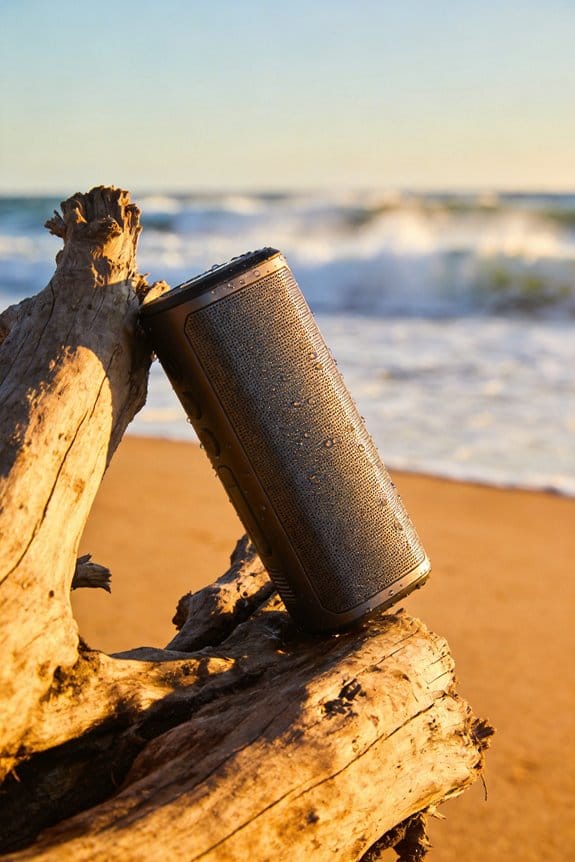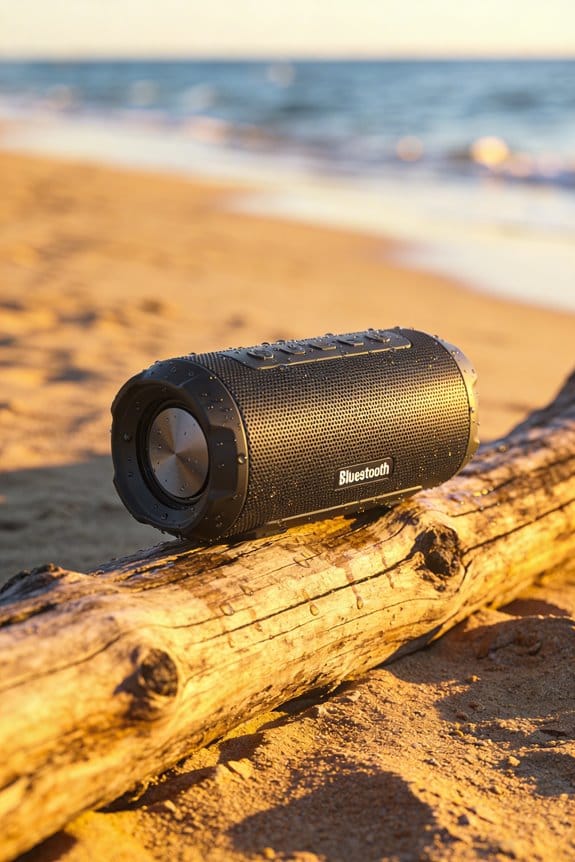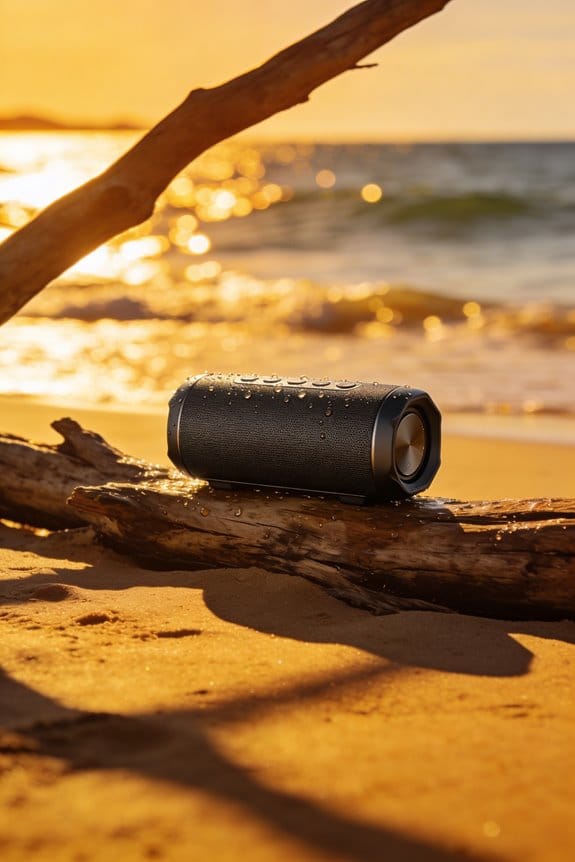


JBL PartyBox 710’s 12‑inch woofer, 700 W amp, 100 dB SPL, and 12‑hour battery give deep sub‑bass that you feel in your chest, while Sony SRS‑XV900’s 10‑inch X‑Balanced driver, 20‑hour battery, and Deep‑mode boost provide portable low‑frequency punch, both with IPX4 water‑resistance for outdoor use; the 60–80 Hz boost adds punch without muddying mids, and syncing LED flashes to BPM amplifies perceived loudness without raising volume, so you get a physical rhythm that drives dancing, and if you keep going you’ll discover more setup tricks.
Key Takeaways
- Low‑frequency vibrations create a physical rhythm that makes crowds feel the music in their bodies, driving dancing and engagement.
- Deep bass (≈26‑30 Hz) adds perceived loudness without increasing volume, making the party feel louder while staying within safe SPL limits.
- Strong sub‑bass enhances the impact of LED light shows, syncing visual pulses to the beat for a more immersive experience.
- Speakers with larger woofers and higher wattage (e.g., 12‑inch, 700 W) can reproduce deep bass accurately, delivering punchier thumps and higher SPLs.
- Bass‑boost modes and EQ adjustments (≈60‑80 Hz boost) amplify the low‑end without muddying mids, ensuring clear, energetic sound for party environments.
Why Deep Bass Drives Every Party Playlist
Ever tried to keep the vibe alive when the night drags on and the crowd starts to lose steam? The secret lies in the low‑end. You need a speaker that can really feel the bass, not just hear it. The JBL PartyBox 710 drops down to 26.7 Hz and has a Bass Boost Deep mode that makes EDM and hip‑hop tracks hit like a floor‑shaking pulse. When the 710 W power output hits the 70‑90 dB SPL needed for 40 Hz bass, the sound fills any indoor or outdoor space and keeping everyone moving.
What makes the 710 stand out is its built‑in LED light show and Bluetooth streaming, so the vibe stays consistent without extra gear. The 25‑hour battery and IPX4 water‑resistance mean the party can go on through rain or marathon dancing sessions without a hitch. I’ve found that deep bass creates a physical rhythm that pulls people onto the dance floor, and the low‑frequency power boosts crowd engagement because listeners feel the music in their bodies, not just through their ears.
Here’s the trick: when you build a party playlist, prioritize tracks with strong sub‑bass. The 710’s reach down to 26.7 Hz will keep the energy high and the audience responsive throughout the event. You’ll notice the difference as soon as the first beat drops—people start moving as if the music is vibrating under their feet.
Frankly, you don’t need a ton of gear to get that effect. Just pair the PartyBox 710 with a few well‑chosen songs, and the speaker does the heavy lifting. The LED lights add visual punch, while the Bluetooth connection lets you swap tracks on the fly without breaking the flow.
Worth knowing: the 710’s power and low‑frequency response are perfect for both small backyard gatherings and larger outdoor festivals. The battery lasts all night, and the water‑resistance protects against accidental spills or a light drizzle. You’ll feel confident that the music won’t die out before the party does.
How Low‑Frequency Power Shapes Outdoor Party Events
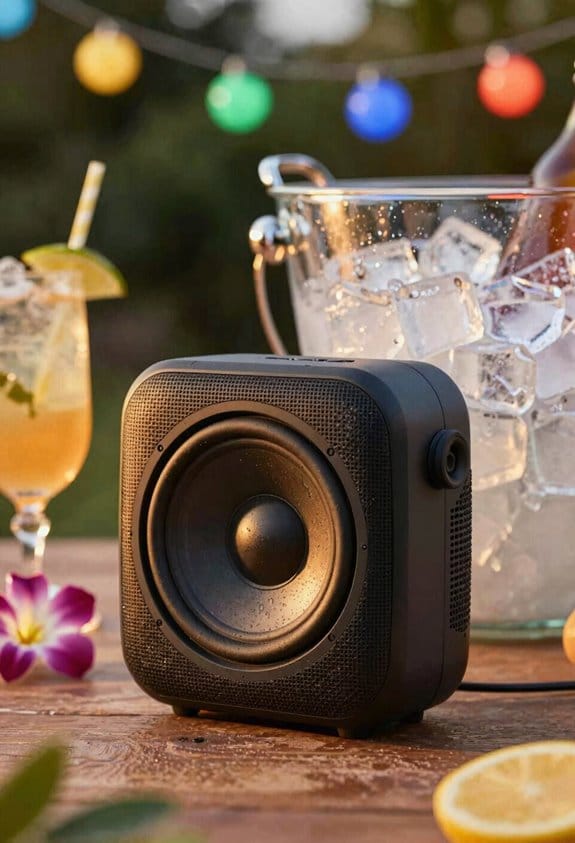
Ever tried to keep the beat going at a backyard party and the music just falls flat? When the bass can’t hit those low notes, the vibe dies fast. The JBL PartyBox 710 packs 710 W of power, pushing 40 Hz bass up to 70‑90 dB SPL—enough to make the floor thump and the crowd move. Its 26.7 Hz low‑frequency extension gives that deep thump EDM and hip‑hop lovers crave, and the 25‑hour battery plus IPX4 water‑resistance means rain or long dance sessions won’t stop the party.
Frankly, the size of the driver matters a lot. Smaller portable speakers are handy, but they usually lack the driver size and SPL to reproduce that heavy bass, leaving a thinner sound that can’t fill a garden or patio. The bigger, heavier party speakers make up for it with multiple drivers, higher power output, and built‑in LED light shows that add atmosphere without extra gear.
If you want the bass to feel solid, look for models that couple well with the ground. Good vibration transfer makes the low end feel more real, and a sturdy enclosure keeps performance steady even when humidity or drizzle shows in.
Worth knowing:
- Choose a speaker with a high SPL rating and an IPX4 or higher protection level.
- Opt for a design that sits flat on the ground for better vibration transfer.
Try this: place the speaker on a solid surface, like a wooden deck or a sturdy platform, instead of a soft rug. That simple step can boost the bass impact and keep the sound clear throughout the night.
The longer you can run the speaker without recharging, the less you’ll worry about interruptions. A 25‑hour battery life means you can set up early, let the music play all evening, and still have power left for the after‑party chill‑out.
SPL, Driver Size & Bass‑Boost: The Technical Edge
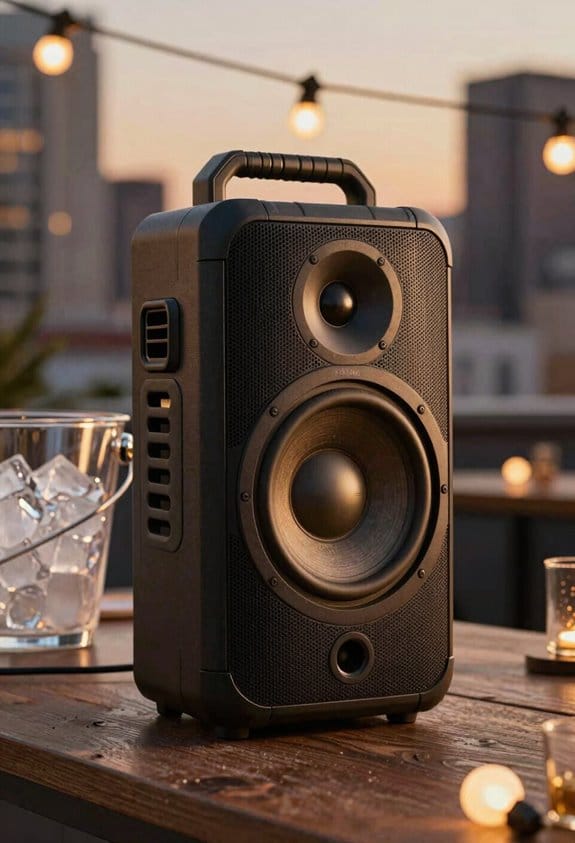
Ever tried to keep a party going when the music starts to sound flat and the battery’s on its last legs? The JBL PartyBox 710 can help you avoid that slump, thanks to its 710 W amp, deep 26.7 Hz low‑end, and a battery that lasts up to 25 hours. Its IPX4 rating also means a light drizzle won’t ruin the vibe.
The big 12‑inch woofers push SPL levels past 100 dB within a 10‑foot radius, so you’ll feel the beat even at the back of the room. The Bass‑Boost button gives you two settings—Deep and Punchy—each tweaking the low‑frequency gain for a tighter thump. When the battery still has about 20 hours left, the sound stays punchy without distortion, thanks to dynamic compression.
If you compare it to a Sony SRS‑XV900, you’ll notice the Sony’s X‑Balanced speaker and 30 W output deliver lower SPL, but its slimmer cabinet makes it easier to tuck away. The PartyBox’s larger drivers, however, create a more immersive sound field that fills the space. Fair warning: the extra power can drain the battery faster if you crank the volume all night.
Try this: place the PartyBox on a sturdy surface about three feet from the crowd’s center. This spot lets the 12‑inch woofers project evenly and keeps the SPL high without overworking the amp. You’ll hear a clearer, more balanced mix, and the bass won’t get muddy.
- 710 W amplifier for strong punch
- 25‑hour battery for all‑night parties
- IPX4 water‑resistance for outdoor use
When the rain starts, you won’t have to worry about water damage, and the long‑lasting battery means you can keep the music going until the last guest leaves. The dynamic compression keeps the bass tight, so the party stays lively even after hours of play.
How to Balance Bass Power and Portability When Picking a Party Speaker
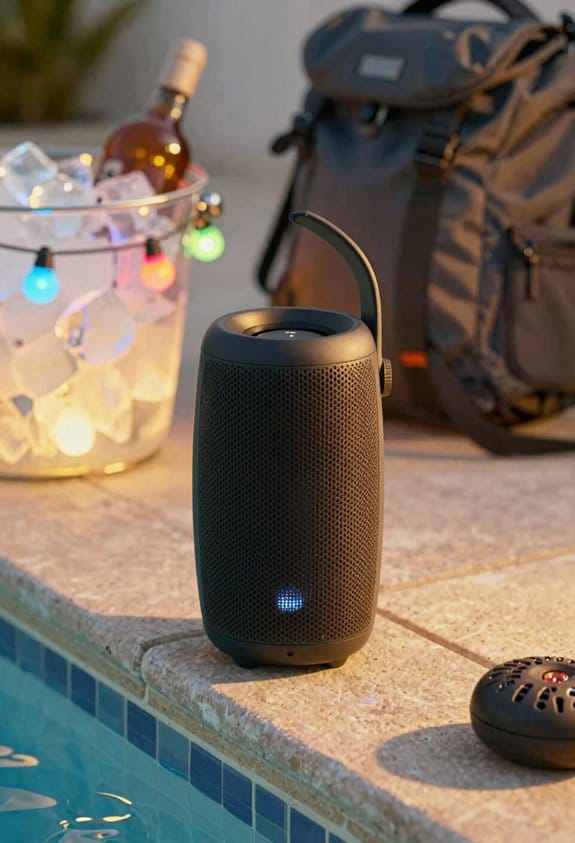
Ever tried to bring that club‑like thump to a backyard BBQ without ending up lugging a mini‑subwoofer? You want the bass to hit hard, but you also need something you can carry up a few flights of stairs or into a cramped apartment. The trick is to weigh driver size, power, battery life, and how rugged the unit is—all while keeping an eye on the weight.
Sony SRS‑XV900 vs. JBL PartyBox 710
The Sony SRS‑XV900 sports a 10‑inch X‑Balanced driver and a 20‑hour battery, so you’ll likely a full night of music before it needs a charge. Its IPX4 rating means a splash won’t ruin it, and the built‑in carry handles feel like they were made for a quick grab‑and‑go. On the other hand, the JBL PartyBox 710 packs a 12‑inch woofer and a 700 W amp that can push SPLs past 100 dB, delivering that deep, floor‑shaking bass you hear at festivals. Its 12‑hour battery and IPX5 rating give it a bit more water resistance, but the unit is heavier and the handle is bulkier, making it a better fit for a stationary setup.
- Bass depth: JBL’s larger driver and higher wattage give you a lower‑frequency floor of 26.7 Hz, while Sony’s 10‑inch driver stays a bit higher.
- Portability: Sony’s lighter chassis and ergonomic handles win for on‑the‑move gigs; JBL’s sturdier build is great if you have a solid surface to set it on.
- Run time: Sony’s 20‑hour life beats JBL’s 12‑hour, which matters if you’re planning a marathon party.
Frankly, if you’re shuffling between a patio and a rooftop, the Sony feels less like a workout. But if you’re setting up a permanent dance floor in a garage, the JBL’s raw power will fill the space without missing a beat.
Worth knowing: the speaker’s handle design can make or break your setup. Sony’s handles are slim and sit low, so you can slip the box under a table or carry it up stairs with one hand. JBL’s handle is wider and reinforced, which is handy when you need to move a heavier box, but it adds a few extra inches of bulk.
When you’re deciding, ask yourself: do you need that extra bass punch, or do you value the freedom to move the speaker wherever the party takes you? The answer will point you to the right model.
Pro Tips for Boosting Party Speaker Bass: EQ, Placement, and Light‑Show Sync
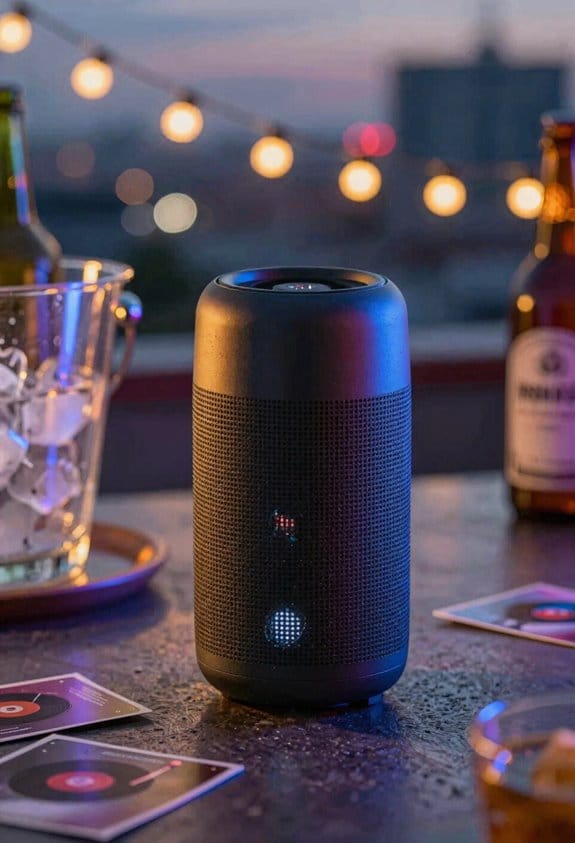
Ever tried to get that deep, floor‑shaking bass at a house party without wrecking your ears or the neighbors’ patience?
The JBL PartyBox 710 packs a 12‑inch woofer, a 700 W amp, and a 12‑hour battery, so you can push SPLs past 100 dB and still feel a 26.7 Hz low‑frequency floor. If you crank a modest +3 dB boost around 60‑80 Hz on the graphic EQ, the thump gets tighter and punchier without muddying the mids. Place the speaker on a solid surface near a wall; the bass waves will bounce back and reinforce each other, giving you that extra “punch” you love.
Sony’s SRS‑XV900 is a lighter, more portable option with a 10‑inch X‑Balanced driver, a 20‑hour battery, and an IPX4 rating. Turn on the built‑in “Deep” bass‑boost mode and set it a few feet from a corner. Even without the massive power of the JBL, you’ll still feel a satisfying floor‑shaking vibe. The companion app lets you sync LED light patterns to the beat, adding a visual cue that makes each low‑frequency hit feel even bigger.
Frankly, room acoustics matter a lot. Hard floors and low ceilings boost bass, while carpet and drapes soak it up. Move the speaker a few inches from a wall or throw a rug in the mix to fine‑tune the thump.
Try this: enable the app’s tempo detection, match the LED flash rate to the BPM, and watch the visual rhythm reinforce the low‑end pulse. The result is a cohesive audio‑visual experience that feels louder without actually raising the volume.
- Check the placement: solid surface + wall = stronger bass.
- Use the graphic EQ: +3 dB at 60‑80 Hz for tighter punch.
If you’re dealing with a room full of carpet, a simple rug can make a big difference. And if you’re near a corner, give the speaker a little space to let the bass breathe before it reflects.
Worth knowing: the JBL’s 12‑hour battery keeps the party going, while the Sony’s 20‑hour run time means you can move the vibe from room to room without hunting for a charger.
What’s the best way you’ve found to make your party bass hit harder without cranking the volume?
Recommended Products

Dolby Atmos Surround Sound: Lose yourself in the moment, with a three-dimensional listening experience. Feel the real power of your favourite TV shows and films.

Class-D amplifier with 1,000W peak output for room-filling sound

Commercial Grade Arcade Machine. Highest Quality 32 LCD Monitor, Thick Tempered Glass. 4500 Games , Please send message for full game list.
Frequently Asked Questions
How Does Temperature Affect Bass Performance in Outdoor Speakers?
I tell you that cooler air is denser, so my driver cooling works harder and bass stays tight; hot, thin air reduces air density, making the low frequencies feel looser and less punchy.
Can I Use a Party Speaker as a Permanent Home‑Theater Subwoofer?
I’ll tell you it works, but expect compromises: portable integration lets you move it, yet frequency matching with your main speakers is tricky, so expect uneven response instead of seamless, dedicated subwoofer performance.
What Is the Ideal Speaker Placement Distance for Optimal Bass Response?
I’d place the speaker about three‑to‑four feet from the wall, keeping it in the near field to avoid standing wave peaks, then fine‑tune the distance by listening for smooth, balanced bass.
Do Waterproof Party Speakers Compromise Low‑Frequency Output?
I’ll tell you straight: waterproof materials can mute low‑frequency output if the enclosure design isn’t engineered for airtight sealing, but a well‑crafted, sealed housing preserves thump while keeping rain out.
How Does Battery Capacity Influence Sustained Bass Power?
I tell you that a larger battery lets me sustain deep bass longer, but as the battery discharges I risk thermal throttling, which cuts power and reduces low‑frequency punch.