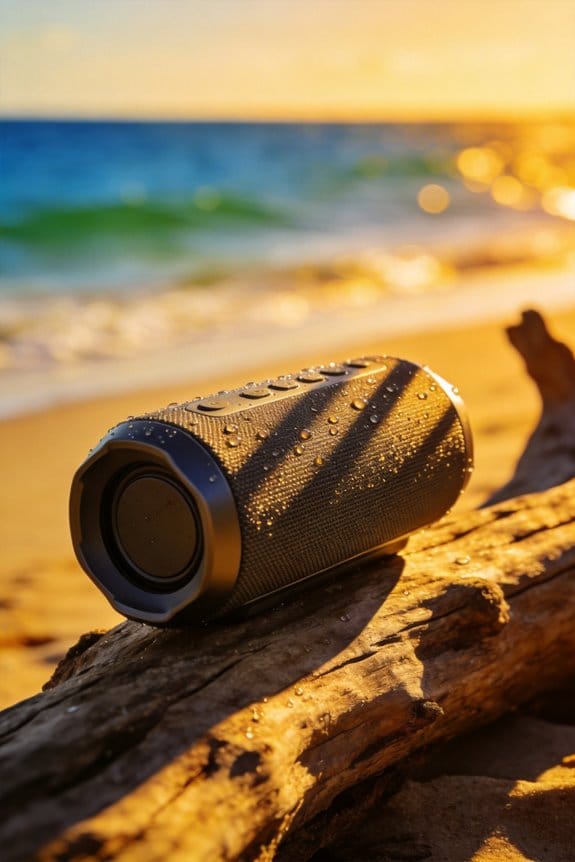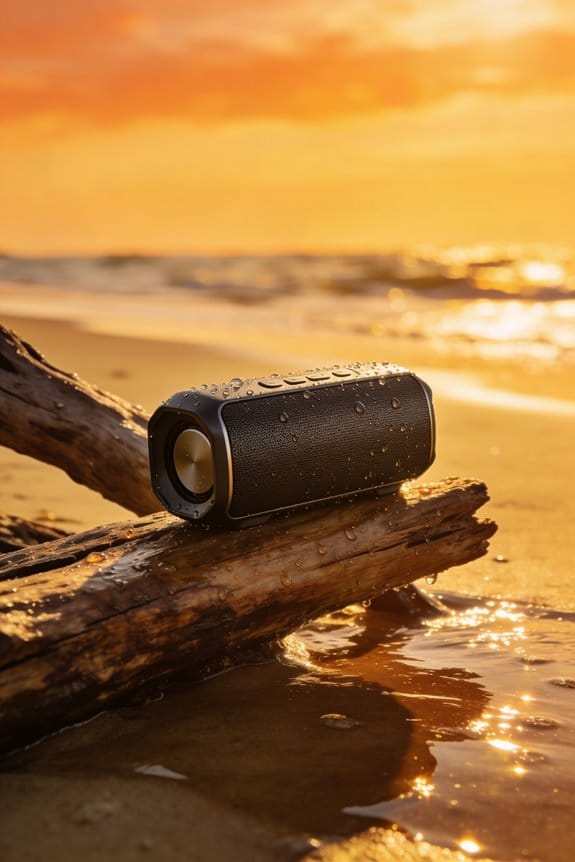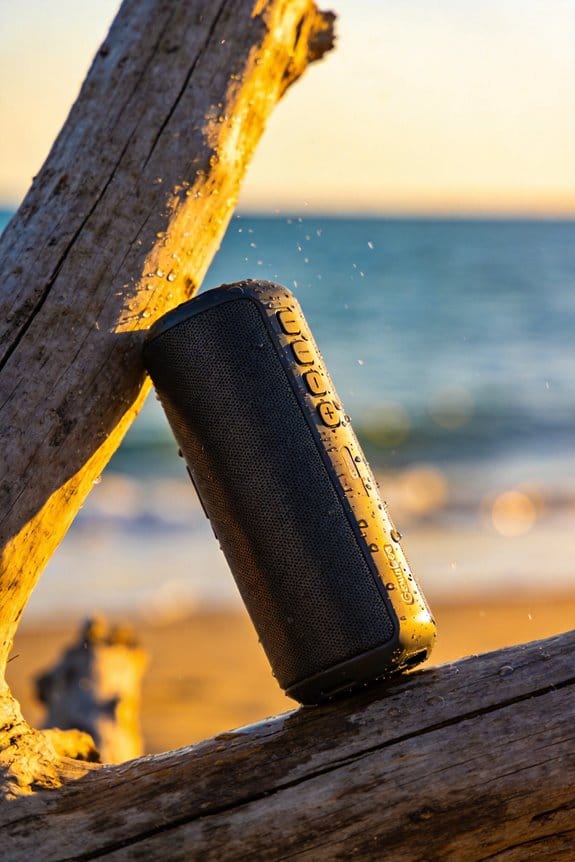


Compact speakers, weighing 300‑500 g and 10‑20 cm tall, give 6‑10 hours of playtime, IPX5‑IPX7 water resistance, and a two‑way driver system that balances mids and highs, making them backpack‑ready for hikes and weekend trips; large portable speakers, 1‑1.5 kg and 25‑40 cm high, offer 10‑15 hours of runtime, IPX3‑IPX6 protection, and a three‑ or four‑way driver array with dedicated woofers down to 40 Hz, delivering room‑filling sound for home‑theater or backyard events. If you keep going, you’ll see more details.
Key Takeaways
- Compact speakers (300‑500 g, 10‑20 cm) balance portability with moderate battery life (6‑10 h) and IPX5‑IPX7 protection, ideal for travel and backpack use.
- Large speakers (1‑1.5 kg, 25‑40 cm) deliver room‑filling sound with deeper bass, but are heavier, less portable, and typically require 10‑15 h of charge.
- Driver configurations scale with size: compact units often two‑way drivers (150 Hz‑20 kHz), while large units use three‑ or four‑way setups with woofers down to ~40 Hz.
- Cost rises sharply with size: compact models $40‑$80, large models $350+, reflecting higher‑quality drivers, larger enclosures, and more robust build materials.
- Use‑case focus differs: compact speakers suit outdoor activities and on‑the‑go listening; large speakers excel as stationary home‑room or party centers.
Key Portability Factors for Choosing a Speaker
Ever get stuck trying to pick a tiny speaker that won’t weigh you down on a hike or a day at the beach? Mini speakers, usually 0‑10 cm long, fit right into pockets or small bags, give you about 4‑6 hours of play, and many come with an IPX7 rating that shields them from splashes and sand. That makes them perfect for casual listening while you’re on the move.
Frankly, weight matters a lot. A 150‑gram mini balances easily on a belt loop, while a 300‑gram compact can tug on a backpack strap. Check if the model has a built‑in clip or carabiner—those little details keep the load even and comfortable.
Worth knowing: the shape of the housing can change how you carry it. A rectangular design slides into a laptop sleeve, but a cylindrical one might roll around in a tote. Always double‑check the IPX rating (IPX5 or IPX7) to be sure it fits your outdoor plans.
If you’re comparing options, look for these quick points:
- Battery life: aim for at least 4 hours.
- IP rating: IPX5 for light rain, IPX7 for full submersion.
- Carrying features: clip, carabiner, or a sturdy strap.
When you test a speaker, hold it in your hand for a moment. Does the weight feel balanced? Does the clip stay snug on a belt? Those small checks can save you from a frustrating day later on.
Decision Framework: Match Size to Your Lifestyle

Ever feel like you’re juggling a speaker that just won’t fit your day‑to‑day routine? Picking the right size starts with looking at where you’ll use it most, how long you need it to last, and how tough you expect it to be.
Mini speakers, under 200 g, give you about four hours of play time and survive a splash with IPX7 rating. They slip into a pocket, so they’re perfect for a commuter who hops on and off trains all day. If you’re often on the move, this tiny option keeps the music going without weighing you down.
Compact models sit in the 300‑500 g range and push battery life to six hours. With IPX5 protection they can handle a light rain or a sweaty workout. Toss one into a backpack for a weekend hike, and you’ll have a reliable soundtrack for the trail without needing a power outlet.
Medium speakers, weighing 500‑800 g, usually last eight hours and carry an IPX4 rating, meaning they’re safe from splashes but not full submersion. They fit nicely on a balcony railing or kitchen counter, so you can enjoy background music while you’re cooking or cleaning. This size works well if you want solid sound without taking up a whole room.
Large speakers, from one to one‑and‑a‑half kilograms, push battery life to ten hours and sport an IPX3 rating for light moisture resistance. They need a dedicated spot in the living room, but they deliver the powerful sound that fills a space. If your home is the main hub for movie nights and parties, this size matches that vibe.
Worth knowing:
- Mini: 4‑hour battery, IPX7, pocket‑size.
- Compact: 6‑hour battery, IPX5, backpack‑ready.
- Medium: 8‑hour battery, IPX4, countertop‑friendly.
- Large: 10‑hour battery, IPX3, living‑room centerpiece.
Frankly, the best choice is the one that fits your daily habits, not just the specs on the box. Which size will keep your music rolling without getting in the way of your life?
Sound‑Quality Trade‑offs Across Speaker Sizes

Ever tried to pack a speaker for a weekend hike and found the sound just didn’t cut it? You’re not alone. Finding the sweet spot between size, weight, and audio quality can feel like a puzzle, but a few basics can guide you.
Compact speakers—the ones that sit around 10‑20 cm long and weigh 300‑500 g—are the go‑to for most travelers. They’re light enough to slip into a backpack yet still give you richer mids and clearer highs than the tiniest models. Their range usually hits 150 Hz‑20 kHz, and the two‑way driver setup (a mid‑range driver plus a separate tweeter) smooths out transients and keeps the volume even across the spectrum.
Larger speakers—think 25‑40 cm—bring a whole new level of depth. With three‑way or four‑way drivers, they add a dedicated woofer that dives down to 40 Hz, giving you that satisfying low‑end thump. The bigger diaphragms on the mids and highs also cut down distortion, so you hear more detail in complex passages.
Mini speakers, under 10 cm, are handy when space is at a premium, but they usually run on a single full‑range driver. Expect a response of about 200 Hz‑15 kHz, which means weaker bass and less nuance in the mids and highs.
Fair warning: you’ll notice the trade‑off the moment you crank up the volume. The larger the driver, the more power it needs, and the smaller the unit, the more you’ll rely on digital enhancement to fill in the gaps.
Worth knowing:
- Portability vs. bass – If you need to move fast, a compact speaker gives you decent sound without weighing you down.
- Driver count matters – More drivers usually mean a cleaner, more balanced output, especially in the low and high extremes.
Recommended Products

POWERFUL ROOM-FILLING SOUND: music to fill your living space thanks to its seven effective drivers

Powerful room filling sound for any living space thanks to its seven effective drivers

EXPERIENCE HIGH-RESOLUTION AUDIO PRECISION - With 32 bit / 96 kHz audio processing and a 14 Hz - 35 kHz frequency range, the Devialet Phantom Ultimate 108 dB delivers music with utmost precision, free from distortion, saturation, or background noise.
Portable Speaker Battery Life: Mini vs. Compact vs. Large

Ever found yourself on a hike, music dying just as you hit the summit? That’s the kind of snag you get when you pick a speaker without checking its battery life. Mini models usually give you 4–6 hours of playback on a single charge, compact units stretch that to 8–10 hours, and the larger speakers can keep the beats going for 12–15 hours. Most minis and compacts sport an IPX7 rating, meaning they can survive a full dunk, while the bigger guys tend to sit at IPX5–IPX6, which handles light rain but not total submersion. So, when you’re planning a day‑long trek or a weekend beach hangout, think about whether you need the longer runtime of a bulkier speaker or the feather‑light, water‑proof mini that might need a recharge a bit sooner.
Frankly, the battery chemistry matters, too. Larger units often use lithium‑ion cells that hold up over many charge cycles, letting the firmware push power‑saving tricks that stretch playback. Mini speakers tend to have simpler management, so a burst of high volume or nonstop streaming will drain them faster than a big model. If you’re the type who cranks the bass for an hour straight, you’ll notice the difference right away.
Worth knowing:
- Mini: 4–6 hours, IPX7 waterproof, light enough for a pocket.
- Compact: 8–10 hours, IPX7, fits a backpack.
- Large: 12–15 hours, IPX5–IPX6, best for base‑camp parties.
When you match the speaker to your event, you’ll avoid those mid‑day music meltdowns. A compact might be perfect for a picnic, while a larger model shines at a backyard BBQ where you’ll be playing all day. Just keep in mind that the bigger the battery, the heavier the speaker, and the more you’ll have to lug around.
If you’re often on the move, consider a mini with a spare power bank in your bag. That way you get the waterproof confidence of an IPX7 rating without sacrificing too much runtime. And if you’re setting up a semi‑permanent spot, the larger speaker’s longer life and higher volume can be a real game‑changer—well, not a “game‑changer” phrase, but you get the idea.
Bottom line: pick the size that fits how long you’ll be out and how much water you expect. Which speaker will you bring on your next adventure?
Recommended Products

Bundle Includes: 2 x JBL Speaker 710, 2 x AC Power Cord, and 1 Year Extra Warranty

LSX II offers the highest quality sound in its size with streaming up to 24bit/384kHz, making high-fidelity sound accessible to more listeners.Waterproof : No
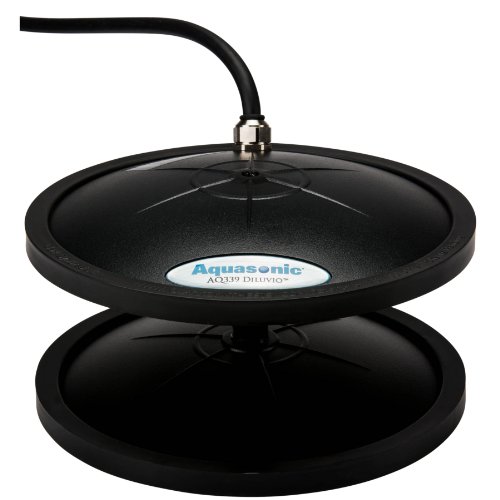
Full range sound -- underwater!
Durability & Weather‑Resistance by Size

Ever been out on a hike and your speaker decides to take a dip in a puddle? It’s frustrating when a little splash can ruin your soundtrack. Here’s how size and weather‑resistance play out for the gear you might already have.
Mini speakers, usually 0‑10 cm long, often carry an IPX7 rating. That means you can drop them in water and they’ll keep humming for 4‑6 hours. Their tiny chassis slips into a pocket, so you’re not lugging extra weight on a rain‑soaked trail. If you’re the type who loves a quick, lightweight boost for a short walk, these are a solid pick.
Compact speakers sit in the 10‑20 cm range and typically have IPX5 to IPX6 protection. They’re built with silicone‑coated frames and reinforced mesh grills, keeping sand and splashes at bay. With 6‑8 hours of playback, they’re perfect for a day at the beach or a park bench picnic. You’ll appreciate the extra durability without sacrificing sound quality.
Medium‑sized units, 20‑25 cm, often come with IPX4 protection and hardened ABS housings. The rubberized corners add a bit of shock absorption, and the battery lasts 8‑10 hours. They’re a good match for backyard barbecues where a light drizzle might roll in, letting you keep the music going without a second thought.
Large speakers, ranging from 25‑40 cm, usually have IPX3 or IPX4 ratings. Steel‑reinforced shells and protective grilles give them a sturdy feel, and the 10‑12 hour battery keeps the party alive. They’re best for semi‑outdoor gatherings where you might get a splash or two, but you won’t be dunking them in a pool.
Worth knowing:
- Mini: IPX7, 4‑6 hrs, pocket‑size.
- Compact: IPX5‑6, 6‑8 hrs, silicone frame.
- Medium: IPX4, 8‑10 hrs, ABS housing.
- Large: IPX3‑4, 10‑12 hrs, steel shell.
Pick the size that fits your usual hangouts, and you’ll avoid those soggy mishaps. Got a favorite brand that’s held up in the rain? Let us know!
Recommended Products

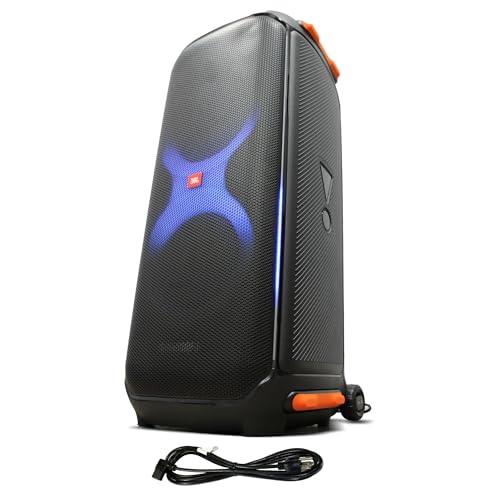
EXCLUSIVE BUNDLE - Includes (1) JBL PARTYBOX Ultimate Portable Party Speaker and (1) gSport Deluxe Protective Speaker Cover

CHARGE WHILE PLAYING – You can now charge your SOUNDBOKS while you crank up the music. All you need is THE CHARGER or a 65W+ UBS-C PD power supply.
Bundle Includes: JBL Speaker 710, AC Power Cord, and 1 Year Extra Warranty
Cost‑Performance Balance for Each Speaker Size
Ever get stuck trying to pick a speaker that fits both your wallet and your playlist needs?
When you weigh cost against performance, the mini‑speaker’s sub‑$25 price tag often means you get 4–6 hours of playback, IPX7 water resistance, and a volume level that’s adequate for personal listening but lacks deep bass, while the compact model, typically $40–$80, adds 6–8 hours of battery life, IPX5‑6 protection, a slightly richer soundstage, and a price that still fits a casual budget; the medium‑sized unit, ranging from $150 to $200, delivers 8–10 hours of runtime, IPX4 durability, noticeably stronger mids and bass, and a price that reflects its broader use‑case flexibility, whereas the large speaker, often above $350, offers 10–12 hours of play, IPX3‑4 resistance, room‑filling volume with deep bass, and a cost that aligns with its premium build and event‑ready performance.
Mini speakers excel in budget efficiency, giving you basic audio for a tiny spend, while compact models improve value scaling by adding hours and durability for a modest jump. Medium units strike a balance, offering noticeable sound upgrades and longer life for a mid‑range cost, and large speakers maximize value scaling, delivering professional‑grade output and endurance at a premium price that still makes sense for serious users.
Frankly, if you’re on a tight budget but still want something that can survive a sudden rain shower, the mini‑speaker is a solid pick. It won’t blow your mind with bass, but it will keep your favorite tracks playing while you’re on the go.
Worth knowing: the compact model gives you a nice step up without breaking the bank, and its IPX5‑6 rating means it can handle a splash or two without a hiccup.
Try this: list out the features you can’t live without—battery life, water resistance, bass depth—then match them to the price tier that fits your budget.
You’ll find that the medium‑sized speaker often hits the sweet spot for most people who want a bit more punch and longer playtime without paying for a full‑size system.
Recommended Products
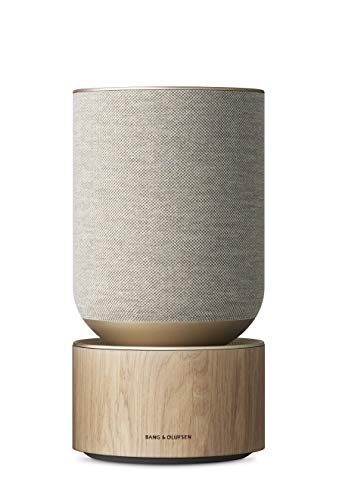
Beautifully balanced: Contemporary, elegant design. Pure, unspoiled sound performance. Two sides to one speaker working in harmony, Beosound Balance.

Premium Marantz Audio Experience

Premium Marantz Audio Experience
Compact vs. Large: Best Use‑Cases
Need a speaker that won’t weigh you down on a hike but still sounds good enough for a beach sunrise?
Compact speakers, usually 10‑20 cm tall, give you 6‑8 hours of playback and IPX5‑6 water resistance. The soundstage is richer than tiny minis, yet they’re small enough to slip into a backpack or jacket pocket. They shine at beach picnics, park outings, and short‑term trips where you care more about portability and battery life than booming bass.
- Ideal for outdoor gatherings where you need a balance of size and decent sound.
- Perfect for bedroom ambience when you want a compact unit that can fill a small space without overwhelming it.
Large speakers, often 25‑40 cm tall, push the playback time to 10‑12 hours and carry IPX7 protection. Their deeper bass and higher SPL make them a natural fit for fixed‑location parties, living‑room movie nights, or backyard barbecues where you want room‑filling audio.
Try this: pick a compact model for on‑the‑go use, and a large model for stationary, high‑impact listening experiences.
Frankly, you’ll notice the difference in how the bass feels and how long the battery lasts.
If you’re planning a weekend trip and need something that won’t break the bank or your back, a compact speaker is the way to go.
For a home theater setup or a backyard bash where you want the music to shake the walls, go big.
Which size matches your lifestyle?
Recommended Products

IMPLOSIVE SOUNDSTAGE - Experience an expansive soundstage that transforms any space into an auditory delight, making it the perfect surround sound system for your home. Superior user experience, including Devialet Remote for precision handling.

Recommended uses for product: Indoor/Outdoor

Compact wireless speaker
Frequently Asked Questions
Do Larger Speakers Support Bluetooth 5.0 or Newer Standards?
I’ll tell you: “Bigger isn’t always better,” yet larger speakers often ship with Bluetooth 5.0 or newer, giving you extended range differences and more stable connections than many compact models.
Can a Compact Speaker Handle Multiple Simultaneous Bluetooth Connections?
I can tell you that most compact speakers support Bluetooth multiplexing, but they rely on connection arbitration, so you’ll typically get one active stream at a time, with occasional dual‑device switching.
Are There Any Size‑Related Differences in Wi‑Fi Streaming Capabilities?
I’d say size matters: larger units often avoid network locking thanks to better antenna placement, while compact models may struggle with Wi‑Fi streaming stability, especially when squeezed into tight housings.
Do Larger Models Typically Include Built‑In Voice Assistants?
I’ve found that larger models usually have built‑in microphones and far‑field processing, so they can host voice assistants more reliably than smaller speakers, which often lack that hardware and acoustic range.
What Are the Recommended Charging Cable Types for Each Speaker Size?
I recommend USB‑C fast‑charge cables for mini and compact speakers, a standard Micro‑USB for medium models, and a Pro‑grade XLR adapter for large units, ensuring reliable power and peak charging speed.