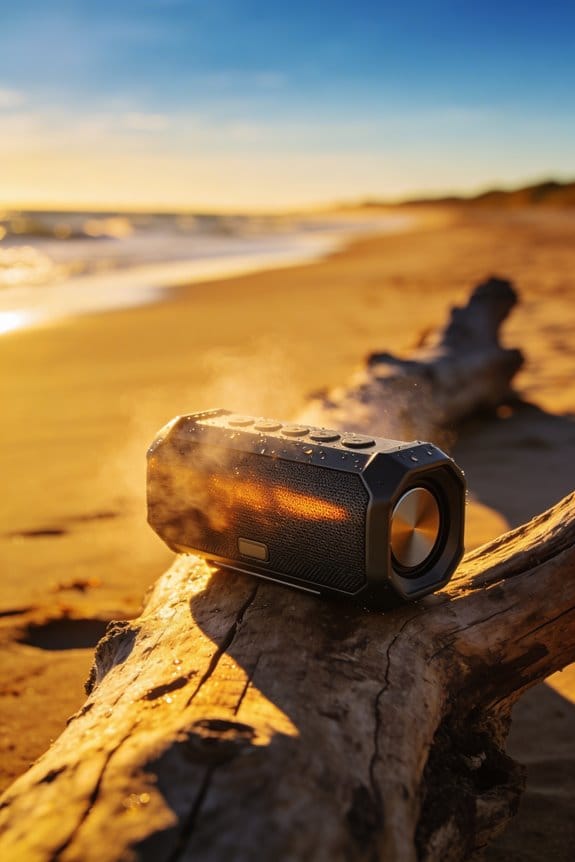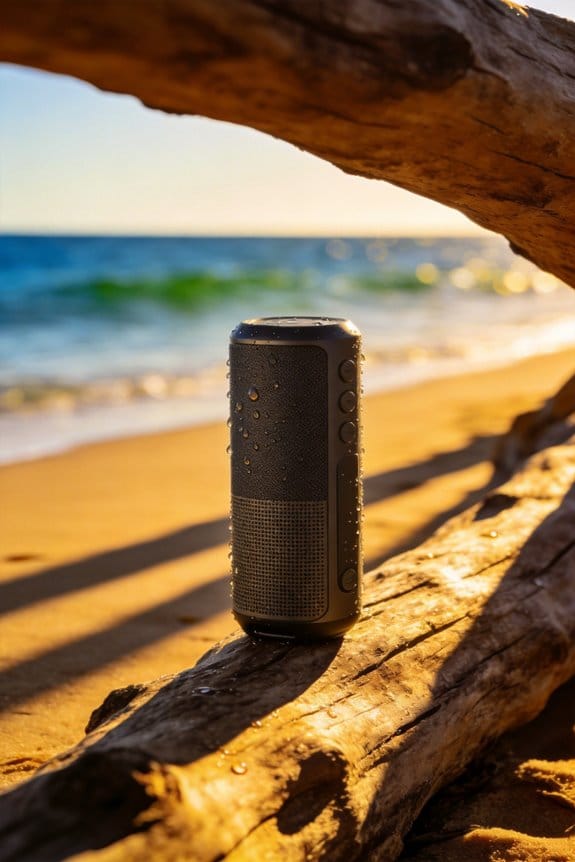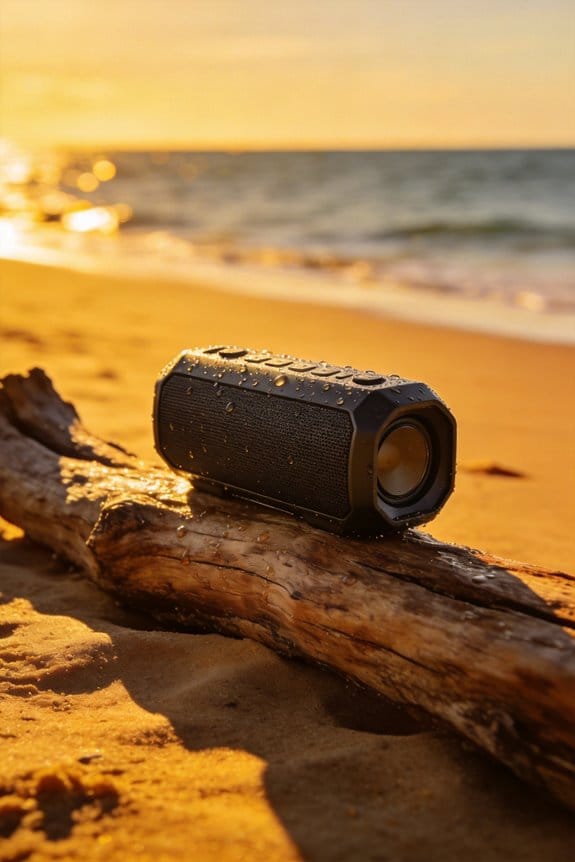


I recommend setting the speaker about three feet off the ground for seated listeners or five feet for standing crowds, using a rigid non‑porous surface like a wooden picnic table or flat stone slab, securing it with the built‑in strap or a carabiner, tilting the driver a few degrees inward, keeping a clear three‑foot radius from trees, tents, and fire pits, and choosing an IP67‑rated model with at least 12 hours of battery life and a 100‑foot Bluetooth range; this setup preserves bass tightness, reduces wobble, and guarantees consistent volume, while a quick on‑site test of bass, treble, and angle will reveal any needed tweaks, and if you keep going you’ll discover even more placement tricks.
Key Takeaways
- Elevate the speaker to ear level (≈3 ft for seated, ≈5 ft for standing) on a hard, flat surface to preserve bass and prevent wobble.
- Tilt the driver inward a few degrees and keep it at least a foot from walls or dense foliage to reduce unwanted reflections and low‑frequency absorption.
- Maintain a clear 3‑ft radius around the speaker, avoiding obstacles such as trees, rocks, tents, or fire pits that block the direct sound path.
- For stereo setups, place two speakers 8–10 ft apart, angled inward, each at ear‑level height on rigid supports for even coverage.
- Test with a familiar track, walk the listening area, and fine‑tune height, angle, and placement to eliminate boomy or muffled spots while ensuring battery life and IP‑67 protection.
Elevate the Campsite Speaker to Ear Level
Ever tried to enjoy a backyard jam session and found the music sounding like it’s coming from the floor? You’re not alone—most portable speakers end up too low, and the sound gets lost under chairs and legs. The trick is to get the speaker up to ear level, and you can do it with things you already have around the yard.
First, look for a sturdy spot about three feet high: a picnic table, a stone wall, or a bench works great for seated guests. Placing the speaker there sends the sound straight into ears instead of ankles, and the 12‑hour battery and IP67 rating stay safe from dust and moisture. If you don’t have a table, a carabiner or strap can hang the device from a tree branch or pole at the same height. Just make sure the strap is tight enough to hold the speaker firm, and check that nearby foliage isn’t blocking the sound path.
Try this:
- Use a strong clip mount that lets you adjust the angle quickly.
- When you secure the speaker on a bench, pull the strap snugly so it won’t wobble.
For standing crowds, aim for about five feet up. That extra height helps the sound travel farther and keeps the audio clear even when people are moving around. The higher placement also protects the speaker’s battery life and dust‑proof rating, so you can keep the music going all evening without worrying about moisture.
Frankly, a stable position does more than just sound better—it reduces vibration, which means the speaker lasts longer. Take a moment to test the setup before the party starts: walk around, listen for any muffled spots, and adjust the angle if needed. A little extra effort now saves you from scrambling later.
Worth knowing: the same mounting tricks work for any outdoor event, from picnics to tailgates. Just keep the speaker out of direct rain and you’ll enjoy crisp audio all night long.
Got a favorite spot in your yard for a speaker? Share it below and let others try it out!
Place the Campsite Speaker on a Hard, Flat Surface
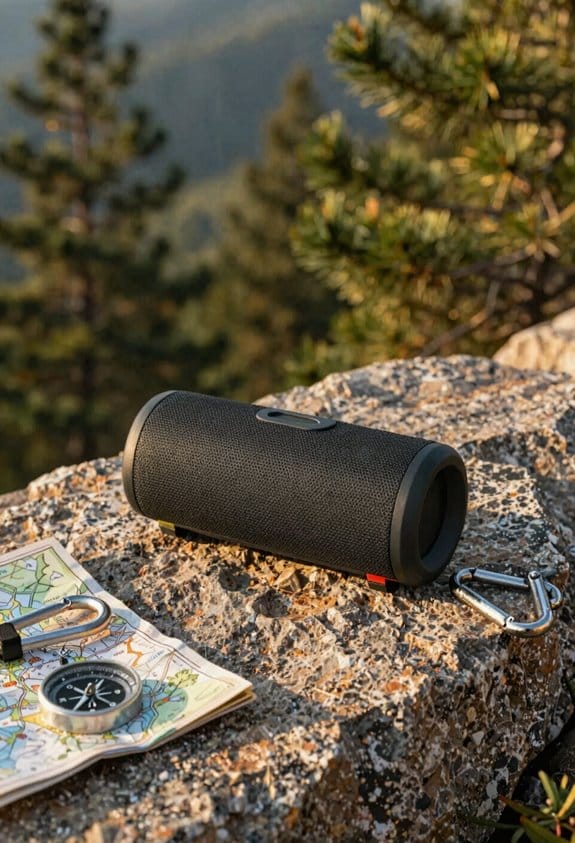
Ever tried to get clear sound from your campsite speaker, only to hear it wobble and muffle on a soft spot? The trick’s to give it a hard, flat surface.
A wooden picnic table, a flat stone slab, or a sturdy log work great because they’re rigid and don’t soak up the sound. When the speaker sits on something solid, the 12‑hour battery‑powered output stays strong, and the IP67 dust‑ and water‑resistance does its job without vibrations dulling the bass or blurring the treble.
Try this: place the speaker so its acoustic chamber faces upward on the flat stone slab. That way the sound spreads across the campsite, and you’ll notice the bass stays tight while the highs stay crisp. The same thing happens on a picnic table—its non‑porous wood lets the audio bounce off without losing energy.
If you’re worried about the speaker wobbling, a solid base stops that in its tracks. The stable placement also helps control vibration, which keeps the music clear all night long.
Worth knowing: the speaker’s 12‑hour battery life and IP67 rating stay fully functional on any of these hard surfaces, so you don’t have to worry about losing power or water damage.
Honestly, you’ll find that a simple log or a sturdy table can make a huge difference in how your music sounds around the fire.
Give it a try and see how much better the sound feels when the speaker isn’t fighting a soft, uneven ground. What’s your favorite campsite spot for the perfect audio setup?
Keep Obstacles Away From the Campsite Speaker’s Sound Path
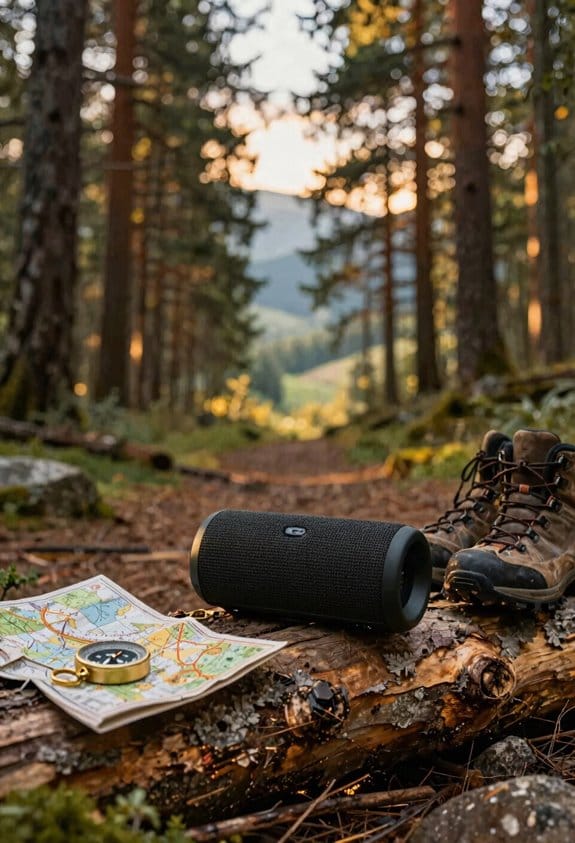
Ever tried to set up a campsite speaker and ended up with muffled sound because something was in the way?
The speaker’s 12‑hour battery life, IP67 dust‑ and water‑resistance, and Bluetooth range of up to 100 feet work best when nothing blocks the direct line of sound to the listeners. I keep trees, large rocks, tents, and even the campsite’s own fire pit at least three feet away because those obstacles can absorb or reflect the audio, muffling the bass and scattering the highs. A clear, unobstructed path guarantees the sound stays balanced and the volume stays consistent across the whole area.
Frankly, you’ll notice a big difference when you give the speaker room to breathe. Make sure there’s a line of sight between the unit and each seating spot; visual blockage often signals acoustic interference. Position the speaker away from wind‑tunnel formations, and use natural wind mitigation like low‑lying shrubs or a small windbreak to keep gust‑induced distortion at bay.
Try this:
- Place the speaker on a flat surface at least three feet from any solid object.
- Arrange seating so everyone can see the speaker without a tree or tent in the way.
When you follow these steps, the tonal quality stays true and the output stays steady throughout the evening.
Do you think you’ll give your campsite setup a little more space for better sound?
Space Multiple Campsite Speakers for Balanced Stereo or 360° Coverage
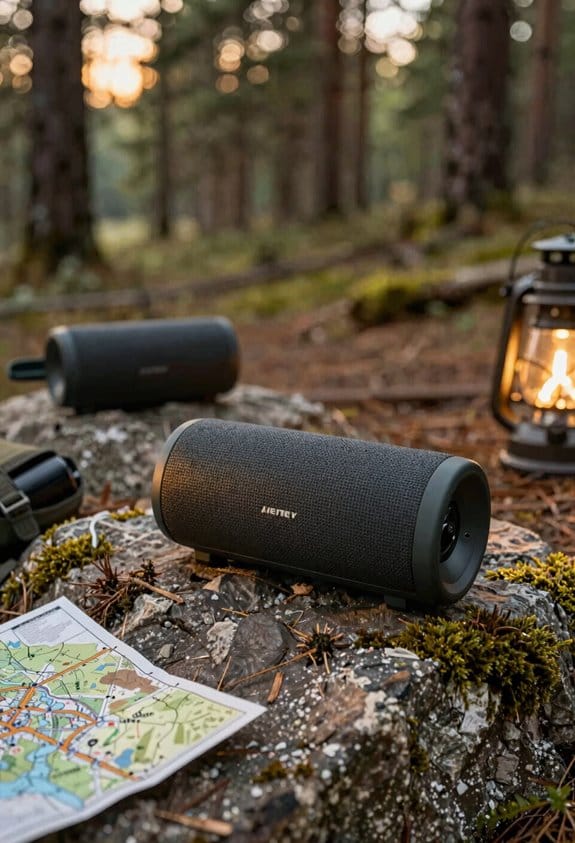
Ever tried to get your campsite speakers to sound good without turning the whole area into a echo chamber?
Bluetooth‑enabled portable speakers with 12‑hour battery life, IP67 dust‑ and water‑resistance, and a Bluetooth range of up to 100 feet work best when you place two or more units 8–10 feet apart, angled slightly inward toward the main seating area. This spacing creates a balanced stereo image, or with 360‑degree models, a uniform sound field that covers the whole campsite without dead zones.
Keep each speaker at ear‑level height—about 3 feet for seated listeners or 5 feet for standing guests—on a hard surface like a picnic table or a rock. A clear line‑of‑sight to listeners prevents unwanted reflections and absorption, while staying a consistent distance from walls and obstacles helps maintain equal volume and tonal balance across the area.
Frankly, careful speaker spacing also supports panoramic imaging, letting every camp‑mate hear the same mix without hotspots. When you arrange the units in a rectangular pattern around a fire pit, the sound wraps evenly, delivering consistent richness whether people sit, stand, or move about the campsite.
Try this: set the speakers 8 feet apart, point them just a few degrees inward, and test the sound from a few spots around the fire. You’ll notice the volume stays steady and the bass doesn’t get swallowed up by the trees.
If you’re using a 360‑degree model, you can skip the inward angle and just spread them out evenly. The key is to keep them off the ground—use a sturdy table or a flat rock—so the sound projects cleanly.
A quick tip: avoid placing speakers directly against a wall or behind a dense bush. Those obstacles can cause the sound to bounce back or get absorbed, leaving a spot with weak audio.
Worth knowing: a hard surface under the speaker helps reduce unwanted vibrations, which can muddy the mids and highs.
So, next time you pack your gear, think about speaker placement as much as you think about marshmallows.
Got a favorite campsite setup that works like a charm? Let me know!
Test and Fine‑Tune Volume, Bass, and Angle on Site
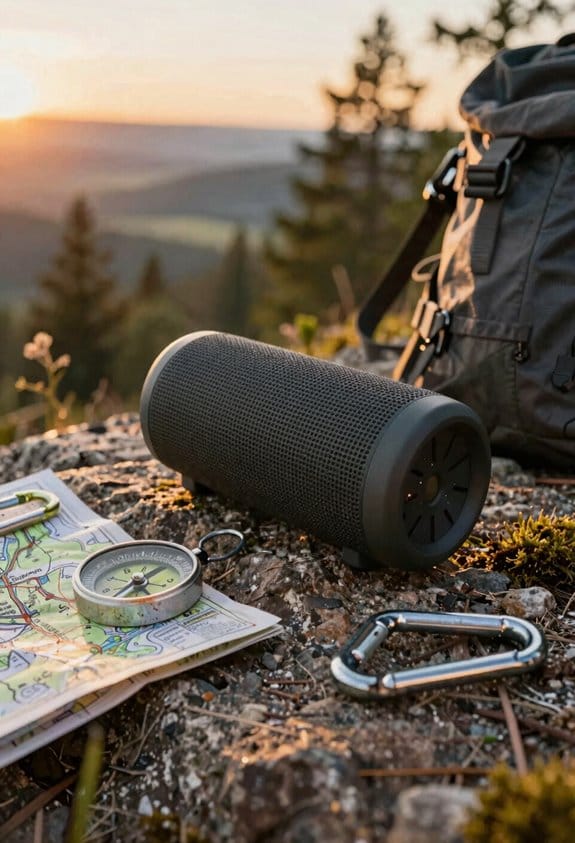
Ever tried setting up a Bluetooth speaker at a campsite and ended up with a muddy bass zone near the fire pit? You’re not alone—getting a clean, even sound outdoors takes a bit of tweaking, but it’s totally doable with a speaker that offers 12‑hour battery life, IP67 dust‑ and water‑resistance, and a 100‑foot Bluetooth range.
Start by playing a familiar track at medium volume. Walk around the fire pit and listen for any boomy bass, muffled mids, or sudden drops in volume. When you spot a problem area, adjust the speaker’s height to ear‑level—about 3 feet for seated guests and 5 feet for those standing. Tilt it inward a few degrees and move it a foot or two away from walls or dense brush, because those obstacles love to soak up low frequencies and cause unwanted reflections. After each tweak, pause the music and check if the sound feels balanced. Keep adjusting until the bass stays tight, the treble stays clear, and the overall level stays consistent across the campsite.
Frankly, the best way to see where the sound is strongest is to make a quick volume‑mapping chart. Mark spots where the audio feels louder or thinner, then use tonal calibration to fine‑tune bass and treble. Move the speaker a few inches at a time, listening for any lingering boomy spots. Make sure the level stays even from the cooking area to the tent entrance, so everyone enjoys a uniform audio experience.
Worth knowing: a speaker’s placement can make a huge difference, especially when you have obstacles like trees or rock walls nearby. Keep the speaker at least a foot away from anything that could block the sound, and avoid pointing it directly at a wall. Small changes in angle or distance can turn a muddy mess into a crisp, open sound field.
Try this: set up a simple test with a short song that has a strong bass line. Play it, then walk the perimeter of your campsite, noting any spots where the bass feels too heavy or the mids disappear. Adjust the speaker’s height, angle, and distance based on what you hear. Repeat the process until the sound feels smooth and even everywhere.
Choose Weather‑Ready Campsite Speakers With Proper IP Rating and Bluetooth Range
Ever tried to keep the party going while a sudden downpour hits your campsite? A speaker that can survive rain, dust and a few bumps is a must‑have, and the right specs make all the difference.
What to look for
- IP‑rating: Aim for at least IP67. That means the unit can handle being dunked in water and stay safe from sand, so you can set it on a log or a rock without a second thought.
- Battery life: Look for a 12‑hour claim, or at least 10 hours of playback on a single charge. You won’t have to hunt for an outlet after a full day of hiking.
- Bluetooth range: A 100‑foot range lets you move from the tent to the fire pit and back without dropping the connection.
Frankly, the enclosure matters just as much as the specs. A rugged shell protects the drivers from splashes and grit, and a simple pairing process saves you time when you’re busy setting up camp.
Why these specs matter
When you’re out in the woods, you’ll probably set the speaker on a stone, a tree stump, or even a tarp. An IP67 rating guarantees that a splash or a brief submersion won’t ruin the sound. Battery life is another pain point; a speaker that dies after a couple of hours forces you to cut the music short or scramble for a charger. And a solid Bluetooth range means you can relax by the fire while the music stays strong, instead of staying glued to the device.
Tips for a smooth experience
- Test the pairing before you head out. A quick tap‑and‑hold should connect the device in seconds.
- Check the audio latency if you plan to watch videos on a tablet; low latency keeps sound and picture in sync.
- Make sure the volume knob or app controls are intuitive, so you can dial it up or down without fumbling in the dark.
Worth knowing: a speaker with a sealed enclosure often includes a built‑in strap or loop, which lets you hang it from a branch or a tent pole, keeping it out of puddles and out of the way of foot traffic.
Bottom line
Pick a speaker that’s built for the outdoors: IP67, 10‑plus hours of battery, and a 100‑foot Bluetooth range. You’ll stay in control of the soundtrack, no matter what weather throws at you. Ready to upgrade your campsite sound system?
Adjust Speaker Height for Seated Versus Standing Listeners
Ever tried to get crystal‑clear sound for friends who are sitting on a picnic blanket and then have to crank it up again for the kids who are standing around the grill? It can feel like a juggling act, but getting the speaker height right makes a huge difference.
First, think about where your listeners will be. If most of them are seated—say on a picnic table or a stone wall—aim for about three feet off the ground. A portable stand that clips on with a carabiner does the trick; just pull it up until the speaker is roughly at ear level. For standing guests, bump it up to five feet, using a side table or a pole. That way the sound heads straight for ears instead of hitting ankles.
Worth knowing:
- Choose hard, flat surfaces like wood or rock. Soft grass or padded benches soak up vibrations and mute the bass.
- Keep the speaker stable; a wobble can cause distortion and waste battery life.
- The unit’s IP67 rating means it handles dust and water, so you don’t have to worry about a light drizzle.
Frankly, the right height also helps the battery last its full 12‑hour run. When the speaker sits on a solid base, it doesn’t have to work as hard to push the sound out, so you get more music and less charging.
Try this: set the speaker on a sturdy wooden slab for seated listeners, then swap it to a metal pole for standing crowds. You’ll notice the audio stays clear and the bass stays punchy, no matter the posture.
A quick tip—avoid placing the speaker on anything that can bounce, like a foam pad. Those surfaces absorb low frequencies and make the overall sound feel thin. A solid platform keeps the vibrations where they belong, right inside the speaker’s enclosure.
Do you ever wonder why some speakers sound great in a park but fall flat in a living room? The answer is often as simple as height and surface. By matching the speaker’s position to your audience’s ear level and using a hard base, you get balanced sound every time.
Now you’ve got a simple plan for both seated and standing listeners. Ready to give your next outdoor gathering a boost?
Optimize Campsite Layout for Speaker Placement and Reflective Surfaces
Ever tried to set up a speaker at a campsite and ended up with muffled sound or a dead battery halfway through the night? You’re not alone. The trick is to map out your listening zone first, then put the unit about three feet off the ground on something solid—think a wooden picnic table or a flat rock. Keep it at least five feet away from big timber trunks or canvas walls, because those things gobble up the sound. The speaker’s 12‑hour battery life and IP67 rating mean it’ll stay powered and dry even if a light drizzle rolls in, and pointing the front face toward the main seating area gives you a clear, balanced sound without cranking the volume.
Try this: place the speaker near a stone wall or the metal rim of a fire pit. The surface will bounce sound back into the crowd, boosting clarity and cutting down on echo. Meanwhile, set up campsite zones so the listening area stays away from cooking or sleeping spots—this keeps noise spillover to a minimum and helps everyone get a good night’s rest. A little planning also protects the speaker from accidental knocks or moisture.
Worth knowing: a hard, flat surface is key. If you’re using a picnic table, make sure it’s stable and not wobbling. A flat rock works well too, just be sure it’s clean and dry before you set the speaker down. The extra height helps the sound travel over heads and foliage, while the distance from large timber or canvas walls stops unwanted absorption.
When you line up the speaker’s front face toward the seating area, you’ll notice the sound spreads evenly without needing a volume boost. This setup also saves battery life because the speaker isn’t working as hard to fill the space. And because the device is IP67‑rated, a light drizzle won’t ruin your evening—just wipe it off quickly and you’re good to go.
Campsite zoning isn’t just about sound; it’s about safety too. Keep the speaker away from the fire pit’s flame and any cooking gear that could cause a spark. A little space between the speaker and any heat source helps prevent accidental damage and keeps the vibe relaxed for everyone.
Frankly, the best part of this layout is how it balances volume efficiency, reduces echo, and protects the gear—all without any fancy gadgets. You’ll end up with a great soundtrack for your campfire, a happy crowd, and a speaker that lasts all night.
Ready to try it out on your next trip? Let’s hear how it works for you.
Frequently Asked Questions
Do Portable Speakers Need a Power Source Beyond Batteries?
I’ll tell you—most portable speakers run solely on battery life, but I keep a power bank handy for extra hours, and I also use solar chargers when I’m off‑grid, ensuring I never run out.
Can I Use a Speaker on a Sand Surface Without a Mat?
I’d say yes, but you’ll need a stable base—sand stability’s low, so the speaker’s vibration can make it wobble. Use a small board or mat to keep it level and prevent sinking.
How Far Can I Place Speakers From Each Other Before Phase Issues?
I picture your setup like a string of lanterns: keep speaker spacing under 8‑10 feet to avoid phase issues, because beyond that the waves start to clash and blur the sound.
Will a Speaker’s Bluetooth Signal Be Affected by Nearby Trees?
I’ve noticed signal attenuation when trees surround the speaker; foliage interference can weaken Bluetooth, so I’d keep the device a clear line of sight away from dense branches for reliable connectivity.
Is It Safe to Hang a Speaker From a Low Branch During Wind?
I think it’s safe if you use a secure attachment and a windproof enclosure; the branch must be sturdy, the speaker should be tightly fastened, and the enclosure will keep wind‑driven vibrations from damaging it.