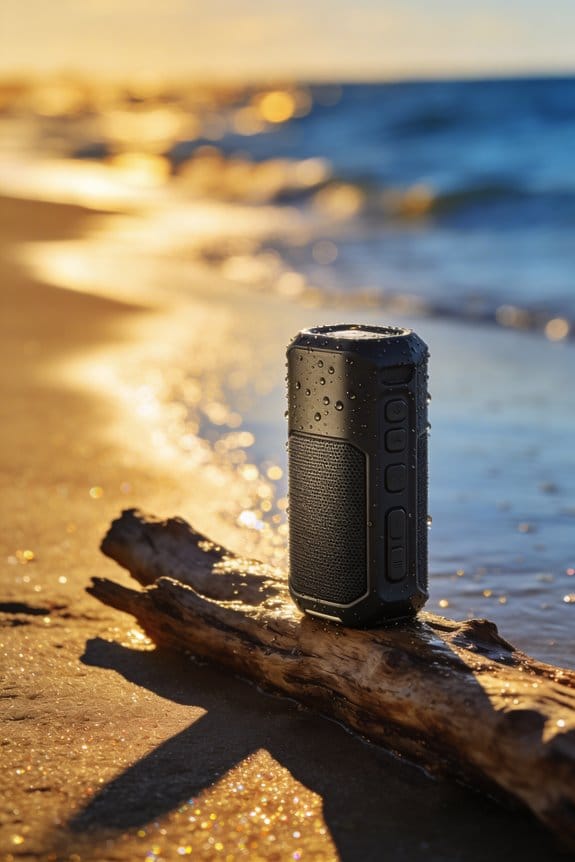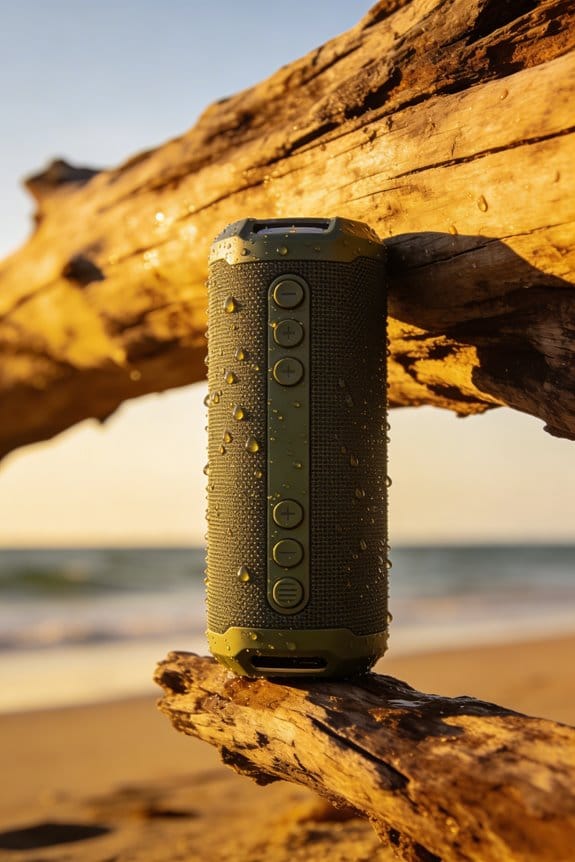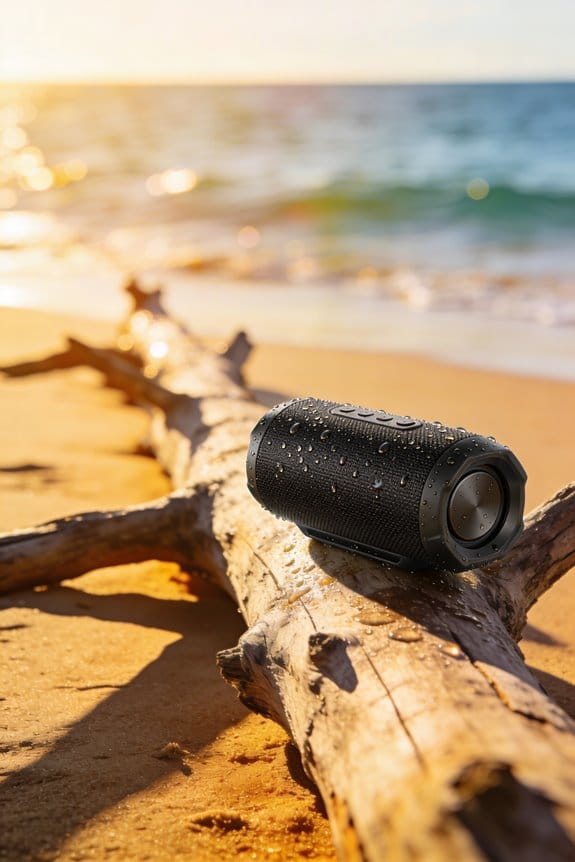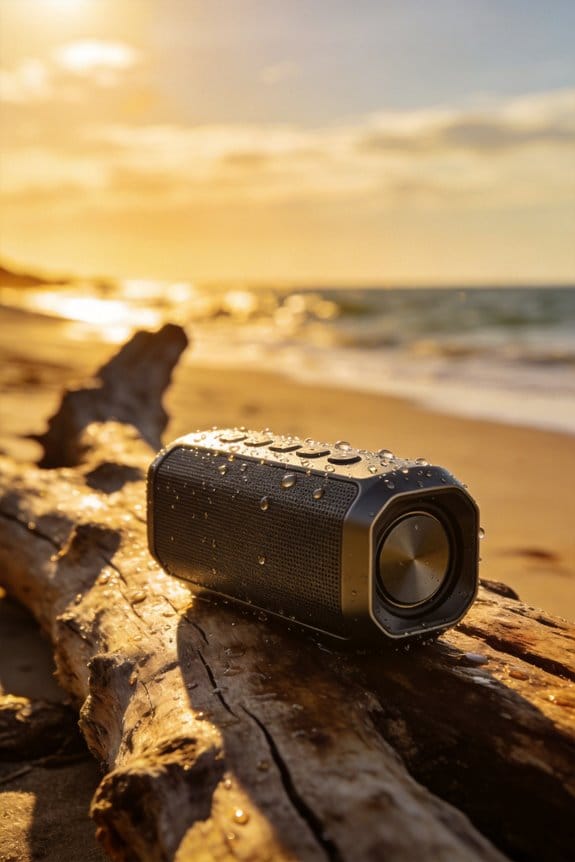
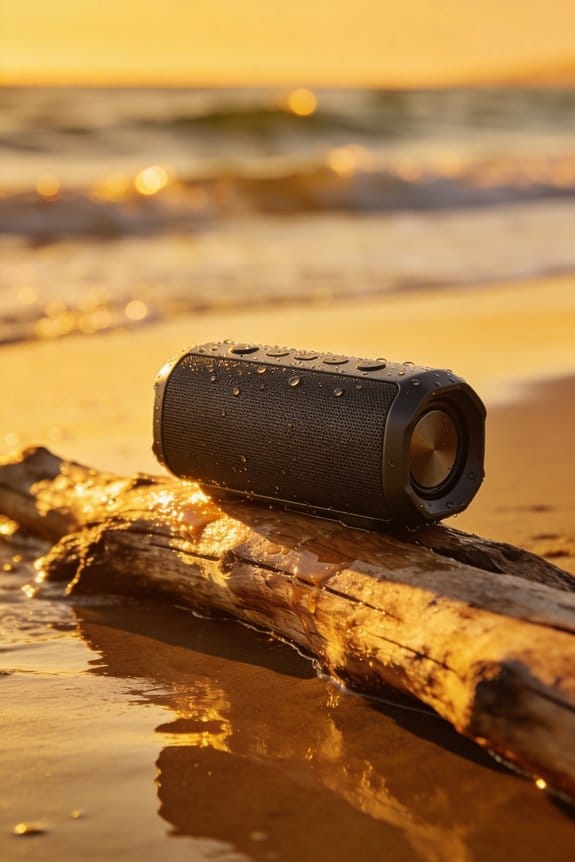

My IPX7‑rated speaker offers 12‑hour playtime, sealed silicone ports, a floating foam core, and a detachable mesh sleeve, so it survives 30‑minute submersion, resists salt and chlorine, keeps sand out of its grilles, and stays buoyant on the sand; I rinse it with fresh water after any salt‑water or pool exposure, pat‑dry with a lint‑free towel, let it air‑dry upright for at least two hours, inspect seals for cracks before charging, and place it on a dry towel or sand‑proof stand to protect sound and moisture. Continue for more details.
Key Takeaways
- Choose a speaker with at least an IPX7 rating (waterproof to 1 m for 30 min) and consider IP67 for added dust protection.
- Rinse the speaker with fresh or distilled water after any salt‑water or pool exposure, then pat‑dry with a lint‑free towel.
- Elevate the speaker on a dry towel, foam board, or mesh sleeve to keep sand off the grille and improve sound projection.
- Seal all ports using silicone bumpers or magnetized covers, and inspect gaskets for cracks before each use.
- Allow the speaker to air‑dry upright for at least two hours before charging; avoid direct sun or heat sources that could degrade seals.
Choose the Right IP Rating for Your Beach‑Ready Bluetooth Speaker
Ever tried to crank up your beach playlist, only to watch the speaker sputter after a splash? Picking the right IP rating can save you that frustration. An IPX4 rating handles light rain or a quick splash, but it won’t survive a dip in the water. If you’re the the sand and surf, you’ll want at least IPX7 – it stays dry up to a meter deep for half an hour. That’s perfect for a quick plunge or a sudden wave. For the ultimate peace of mind, go for IP67. It blocks dust and keeps water out down to about 1.5 meters, which is handy when sand gets into the grilles.
Worth knowing:
- IPX4 – splash‑resistant, no submersion.
- IPX7 – waterproof up to 1 meter for 30 minutes.
- IP67 – dust‑proof and waterproof to 1.5 meters for the same time.
Frankly, most beach‑goers don’t think about the difference between fresh water and salty or chlorinated pools. All the ratings are tested with fresh water, so salt and chlorine can still wear down seals over time. A quick rinse with fresh water after a day out in the surf will keep the speaker’s internals happy and the sound clear.
I’ve seen a speaker with a 12‑hour battery and an IPX7 rating survive a sudden wave without a hitch. An IP67 model with a 10‑hour run time stayed dry even when sand clogged the grill, but both needed that post‑beach fresh‑water rinse to keep the seals intact. If you’re planning a weekend on the sand, a higher rating like IPX7 or IP67 is worth the extra cost. It’s a small step that saves you from a dead speaker later.
Recommended Products
![eAhora M1P Pro [2026] Peak 6000W Electric Motorcycle for Adults, 50MPH High Speed Street Legal Electric Scooter, 110 Miles Max Range with Dual Battery, DOT Certified Fat Tire Chopper for Commuting](https://m.media-amazon.com/images/I/41iszPp6uCL._SL500_.jpg)
[Industry-Leading 110-Mile Range: The Ultimate Distance] – Redefine your boundaries. The 2026 M1P Pro introduces a revolutionary dual-battery system, extending your total range to a massive 110 miles. Whether it's a cross-city commute or a weekend road trip through the countryside, this smart design eliminates range anxiety forever. Swap batteries in seconds and keep the adventure going—freedom is now truly limitless.

LOUDEST PORTABLE SPEAKER ON THE MARKET - Delivering an impressive 126 dB of vibrant, crystal-clear sound, this speaker is designed to fill any space—whether indoors or outdoors—ensuring high-quality audio that cuts through the noise for an unmatched listening experience. Wet Sounds Portable Speaker is the loudest for it's size in the market.

300 WATTS PEAK OUTPUT – (100 RMS) power an 8-inch passive woofer and a 1.5-inch tweeter to be as loud as you like; Smooth detailed highs and rich mid-bass lows to cut through all the wind and roar; BLUETOOTH 5.0 – for long range reliable wireless connection to your smartphone
Protect Your Beach‑Ready Bluetooth Speaker From Salt & Chlorine Corrosion
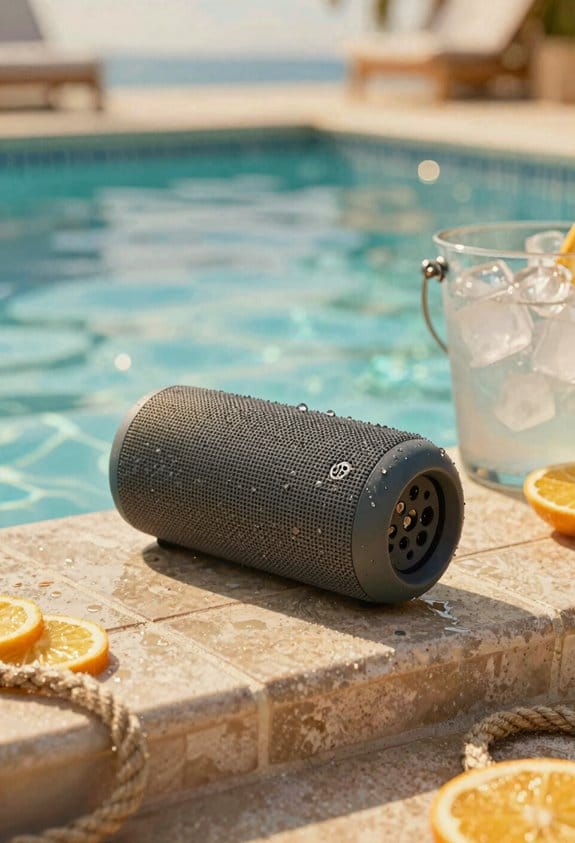
Ever taken your Bluetooth speaker to the beach and noticed a gritty film on it after a day in the surf? That salty residue and pool chlorine can eat away at even the toughest water‑resistant gear. After each dip, give the unit a quick rinse with fresh water, then dry it with a lint‑free towel. Before you plug it in, check the rubber port covers for any cracks.
Worth knowing:
- Wipe the mesh grille, battery compartment, and charging port with a damp microfiber cloth.
- Let the speaker air‑dry upright for at least two hours.
The lingering salts will otherwise corrode metal contacts and weaken plastic seals, cutting short your speaker’s life. I keep a small resealable bag of silica packets in my beach bag; they soak up any leftover moisture. Always double‑check the IPX7 rating before you submerge—fresh‑water tests don’t cover the aggressive chemistry of ocean or pool water, so a thorough rinse and dry routine is key.
Frankly, a quick visual inspection after each use can save you a lot of hassle later. If you notice any wear on the seals, replace them before charging. A little extra care now means your speaker stays clear‑sound for many more summer playlists.
Got any other tricks for keeping beach gear in top shape? Let’s hear them.
Recommended Products

CHARGE WHILE PLAYING – You can now charge your SOUNDBOKS while you crank up the music. All you need is THE CHARGER or a 65W+ UBS-C PD power supply.

Includes a Wet Sounds SHIVR-55 Cooler GatorStep Full Skin Kit - Black Over Gray

Real Performance Sound, Not a Party Toy: An 8-inch driver, Class D amp, and Vortex Bass built for DJs and performers
Keep Sand Out of Ports and Grilles on Your Beach‑Ready Bluetooth Speaker

Ever tried to set your Bluetooth speaker on a beach and watched sand creep into every little opening? The JBL Flip 6 handles that pretty well, thanks to its IPX7 rating and a 12‑hour battery. It has sealed rubber covers, a mesh‑screened speaker cone, and a recessed charging port that sits flush with the chassis. The detachable silicone bumper also catches stray grains before they reach the drivers.
I’ve found that keeping the speaker on a dry towel or a sand‑proof stand helps a lot. When you place it on a towel, the fine grains can’t slip into the internal circuitry, and you avoid those annoying clicks that happen when sand gets inside. Plus, the towel gives the speaker a little extra cushion if it takes a bump.
Try this: after each beach session, give the grille a gentle brush with a soft‑bristle brush. It clears out any sand that settled on the mesh without scratching the surface. For the ports, magnetized covers snap shut securely, so you get quick access for charging while keeping sand out.
Here’s the trick: when you’re packing up, make sure the silicone bumper is snugly attached. It acts like a tiny wall that traps any particles that might have slipped past the rubber covers. A quick wipe with a dry cloth before you store the speaker also helps prevent sand from sticking to the exterior.
Fair warning: if you leave the speaker in direct sun for too long, the heat can make the rubber seals a bit softer, which might let dust in more easily. So, try to keep it in the shade when you’re not using it.
Recommended Products

ALL METALS, ALL SOIL, ALL THE TIME. The Equinox 600 combines the power of multiple detectors into 1. Choose between 3 single frequencies when you have a specific target in mind, or use our revolutionary Multi-IQ tech to automatically employ 5 at once.

8 HOURS OF PLAYTIME - We built the Wet Sounds SHIVR to be the staple of every event. With over 8 hours of playtime on the built-in lithium-ion battery, this party cooler might outlast you and your friends!
Battery Included
Seal Ports and Grilles Before Use to Keep Sand Out
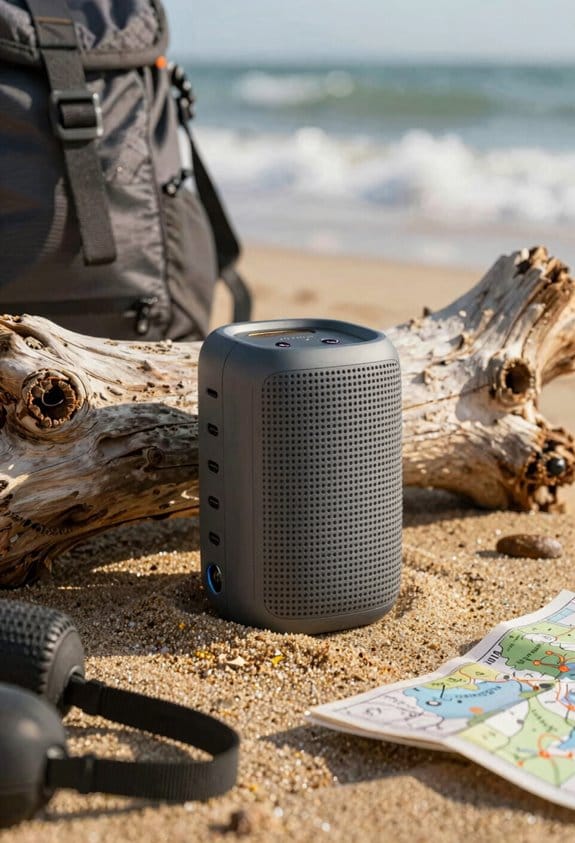
Ever tried to set up your JBL Flip 6 on a beach and watched sand sneak into the ports? It’s annoying, and it can ruin the sound fast a few minutes. The speaker’s IPX7 rating and rubber‑sealed ports keep most of the grit out, but you still have to snap on the magnetized covers and press the silicone bumper tightly before you hit play.
First, line the bumper up with the recessed port and give it a firm press. Then, click the magnetic cover into place—listen for that satisfying snap. Finally, brush off the grille so any stray grains don’t linger. I always double‑check that the gasket’s weather‑proof adhesive looks intact; a tiny gap can let fine sand crawl into the circuitry and cause crackling.
- this:
- Press the silicone bumper first, then lock the magnetic cover.
- Give the grille a quick brush‑off before you start listening.
A quick visual check saves you a lot of hassle later. If the cover doesn’t click solidly, the sand will find its way in. And if the gasket looks worn, replace the cover before you head out again.
Frankly, a tight seal is the only thing standing between your music and a gritty mess. Once you’ve got the seal right, the speaker stays sand‑free all day, no matter how many waves roll in.
Enjoy the beach beats—your Flip 6 will thank you. Ready to give it a try?
Recommended Products

TRUE STEREOPHONIC 360° SOUND: Drivers on all sides so you can feel the beat no matter where you're standing.

Dynamic LED Lights
Dry Your Beach‑Ready Bluetooth Speaker Properly After a Day by the Water
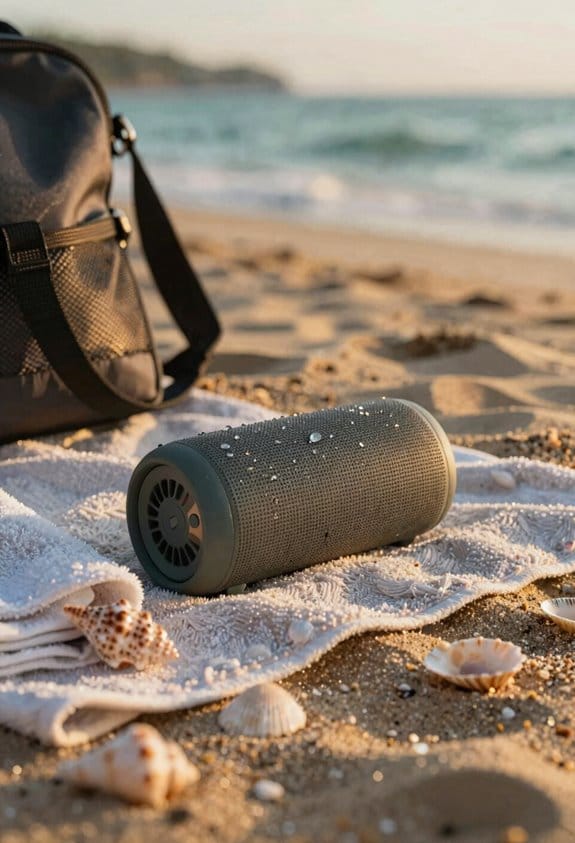
Ever had a beach day end with a soggy speaker that won’t turn on?
You’ve probably noticed the water droplets on the grille and wondered how long to wait before you plug it back in.
How to dry your IPX7‑rated speaker right
First, grab a lint‑free towel and give the speaker a gentle pat‑dry. Press lightly to soak up the droplets—don’t rub hard, or you could push water into the ports. Then set the unit upright on a dry rack or a clean towel, letting it air‑dry for at least two hours. Make sure the spot is well‑ventilated and out of direct sunlight; the heat can warp the seals.
A quick check before you charge
If your speaker has a built‑in humidity sensor, keep an eye on it. When the reading drops below 30 % relative humidity, you’re good to go. Before you plug it in, look at the battery indicator—if you see any condensation, give it a bit more time.
Try this:
- Place the speaker on a mesh surface so air can flow through the grille and port gaps.
- Avoid hair‑dryers; the heat can damage the waterproof coating.
Why the extra care matters
A dry, clean speaker not only lasts longer but also keeps the sound quality crisp. You’ll avoid those annoying “click‑pop” noises that happen when moisture gets inside the driver.
A final tip for beach lovers
Store the speaker in a breathable case when you’re not using it. That way, any lingering moisture can evaporate, and you’ll be ready for the next wave.
Got any other beach‑gear hacks? Share them below!
Clean Your Beach‑Ready Bluetooth Speaker After Salt‑Water or Pool Exposure
Ever pulled your Bluetooth speaker out of the sea or a chlorinated pool and wondered how to keep it from rusting or short‑circuiting? The first thing you’ll notice is a film of salt crystals or chlorine on the grille, ports, and body. Rinsing it briefly under lukewarm tap water (if the maker says it’s okay) melts those deposits. Give it a gentle shake to knock off excess water, then pat‑dry with a lint‑free towel. Let it air‑dry upright for at least two hours in a shaded, well‑ventilated spot so the seals stay tight and the battery—often an 8‑hour model that can dip to 30 % after a day’s use—doesn’t get soggy.
Worth knowing:
- Use distilled water for the rinse to avoid adding mineral buildup.
- After drying, inspect the rubber port covers for any cracks; a broken seal can let moisture in and cause corrosion.
Frankly, the salt‑removal step is the most important part. A quick look at the ports and a careful wipe with a soft cloth can save you from costly repairs later. I always store the speaker in a dry pouch before the next beach trip, which keeps it safe from humidity and sand.
If you’re planning a day at the shore, bring a small, resealable bag for the speaker after you finish. That extra layer of protection helps keep the drying dry while you’re packing up. And remember, a little extra care now means your speaker will keep sounding clear for many summers to come.
Got any other beach‑gear tips you swear by? Share them below!
Use a Floating Case to Safeguard Your Beach‑Ready Bluetooth Speaker
Ever dropped your Bluetooth speaker in the sand and watched it sink? A floating case can keep it afloat for up to 30 minutes when it accidentally tips into water. The case I use has a buoyant foam core and sealed zippers, so the speaker stays dry and functional. Its waterproof zip meets IPX7 standards, letting you submerge up to 1 meter for half an hour without a hitch.
Try this: pick a model with a 12‑hour battery, a sturdy silicone strap, and a detachable mesh sleeve. The mesh lets sand fall away, while the foam lifts the device off wet sand, reducing direct contact. Reinforced corners protect against drops, so your music keeps playing without interruption.
When you place the case on a towel or beach chair, the foam does most of the lifting. That means less sand gets stuck in the speaker’s ports, and you won’t have to worry about sudden sinking. The sealed zippers keep moisture out, and the padded interior spreads the weight evenly, preventing the case from tipping over.
If you’re a beach‑goer who loves a good playlist, this setup is a lifesaver. The silicone strap stays snug, even when you’re moving around, and the mesh sleeve is easy to clean after a day in the sand. You’ll notice the difference the soon as you hear the speaker humming without a hiccup.
Fair warning: don’t forget to rinse the case after each use. Salt can corrode the zip, and sand can get into the foam over time. A quick rinse and a gentle shake will keep everything in top shape for your next outing.
Recommended Products

Smart App Control & Customization: Effortlessly customize text, images, or videos via our intuitive smart app. Unlike traditional static signs, this LED box allows for dynamic updates anytime, saving you manual replacement costs while keeping your marketing fresh.

4-Pack Includes: 4 - T605 Two Way Radios, 4 - PTT Earbuds, 4 - Remote Speaker Mics, 2 - USB-C Charging Cables, 4 - NiMH Rechargeable Batteries, 4- Belt Clips, 2 - Carry Cases

INCREDIBLY LOUD, CLEAR SOUND, POWERFUL BASS: With crisp highs and punchy bass our professional-grade sound excels, providing the soundtrack loud enough for your outdoor adventures. One DemerBox is plenty to get the party started, but pair multiple DemerBox speakers to create an outdoor sound system anywhere!
Position Your Beach‑Ready Bluetooth Speaker for Great Sound and Low Moisture
Ever tried to crank up your beach playlist only to have sand crawl into the speaker and the sound go quiet? You’re not alone. A few simple tricks can keep the music booming and the device dry all day.
First, find a spot that’s a little higher than the sand. A towel, a small wooden stand, or even a piece of foam board works great. Keeping the speaker at least a foot off the ground stops sand from getting into the driver and lets the sound travel farther. Point the driver straight toward where you’ll be hanging out, and you’ll notice a clear boost in audio quality.
Try this: place the control panel out of direct sunlight. A sun‑baked grille can overheat fast, especially on a hot day. If you have a beach umbrella or a light canopy, set the speaker underneath it. The shade keeps the electronics cool without muffling the sound.
A 12‑hour‑battery model with an IPX7 rating gives you peace of mind. It can survive up to 30 minutes underwater, so a surprise wave won’t ruin your jam session. Just make sure the ports are sealed and the case is waterproof. A silicone strap or a small bungee cord can lock the unit to your towel or chair, preventing it from sliding into damp spots.
Worth knowing: check the IP rating before each outing. It’s a quick way to confirm the speaker still meets the moisture‑resistance you need. After you’re done, wipe the surface with a dry cloth. This simple step clears away salt and sand, keeping the sound crisp for the next adventure.
If you’re looking for a quick setup, here’s a short checklist:
- Elevate the speaker on a towel, stand, or foam board.
- Point the driver toward the listening area.
- Keep the control panel out of direct sun.
- Use a silicone strap to secure it.
- Wipe down after use.
A little extra protection never hurts. A waterproof case with sealed ports adds a layer of defense, especially if you’re near the water’s edge. And don’t forget to give the speaker a quick visual once before you start—any loose sand or water droplets can be cleared away in seconds.
Finally, remember that the best beach sound comes from a mix of good placement and a little common sense. Keep the speaker elevated, protect it from the sun, and secure it with a strap. You’ll enjoy clear music and stay dry, no matter how the tide rolls in. Ready to try these tips on your next beach day?
Frequently Asked Questions
Can I Use a Bluetooth Speaker While It’s Charging on the Beach?
I’d say no—charging safety on the beach is risky. Salt and sand accelerate beach corrosion, and exposing a plugged‑in speaker to moisture or heat can damage both the battery and the device.
Will a Speaker’s Battery Life Decrease After Repeated Salt‑Water Exposure?
I’ll tell you plainly: repeated salt‑water exposure will erode the battery, causing corrosion and shortening life, and it may void the warranty. Rinse, dry, and protect to keep performance steady.
Is It Safe to Leave a Speaker Unattended Near a Beach Fire?
I’d say no—leaving a speaker unattended near a beach fire risks battery damage from heat and invites theft. Keep it close, shield it from flames, and use a lock or tether for theft prevention.
Do Bluetooth Signals Weaken When the Speaker Is Placed Under a Beach Umbrella?
Do Bluetooth signals weaken under a beach umbrella? Yes—signal attenuation occurs because umbrella materials, especially fabric or metal, block and reflect radio waves, reducing range and stability for your speaker.
Can I Connect Multiple Speakers Together for a Larger Beach Sound System?
I can link several units using multi‑room or stereo pairing, so you’ll get a wider soundstage. Just make sure each speaker supports the same protocol, keep them within range, and sync them before the beach session.