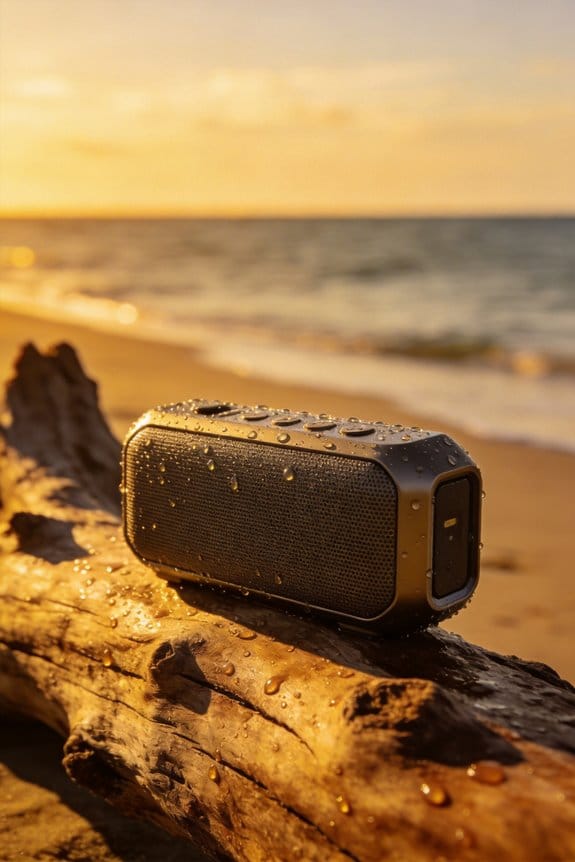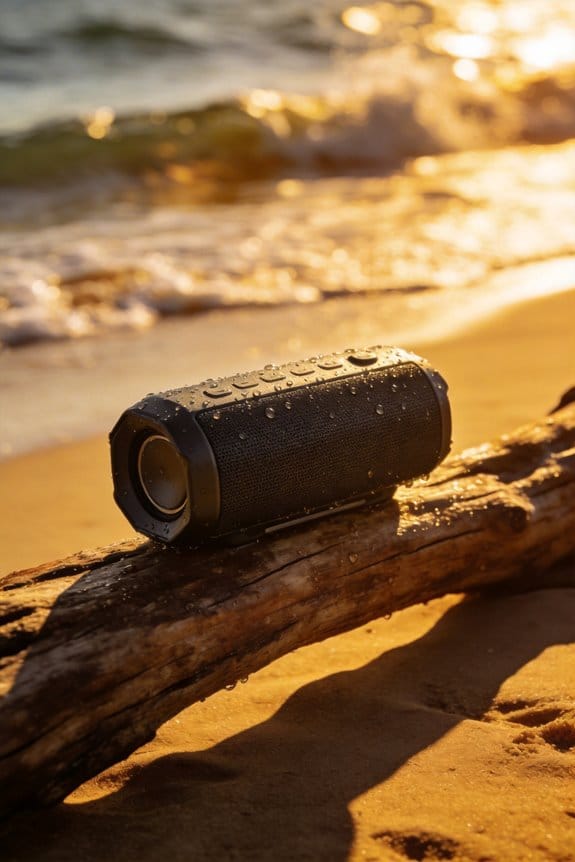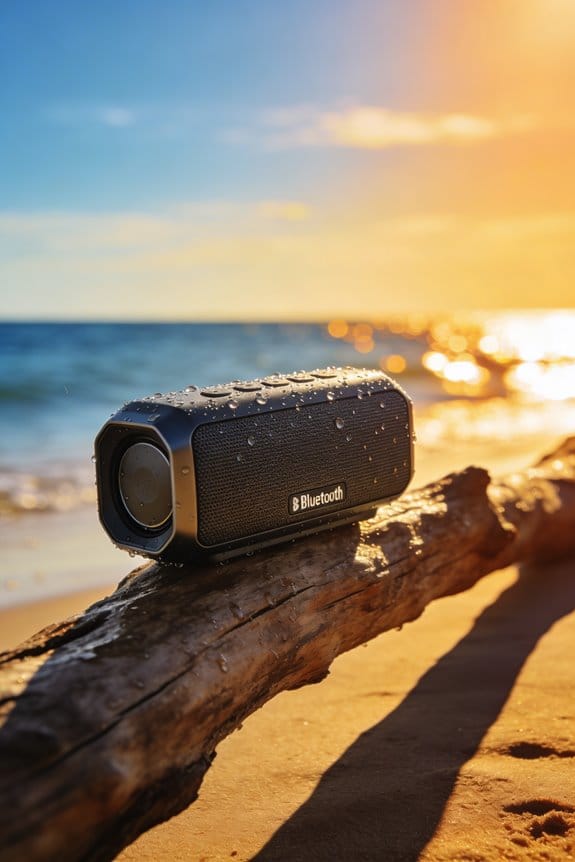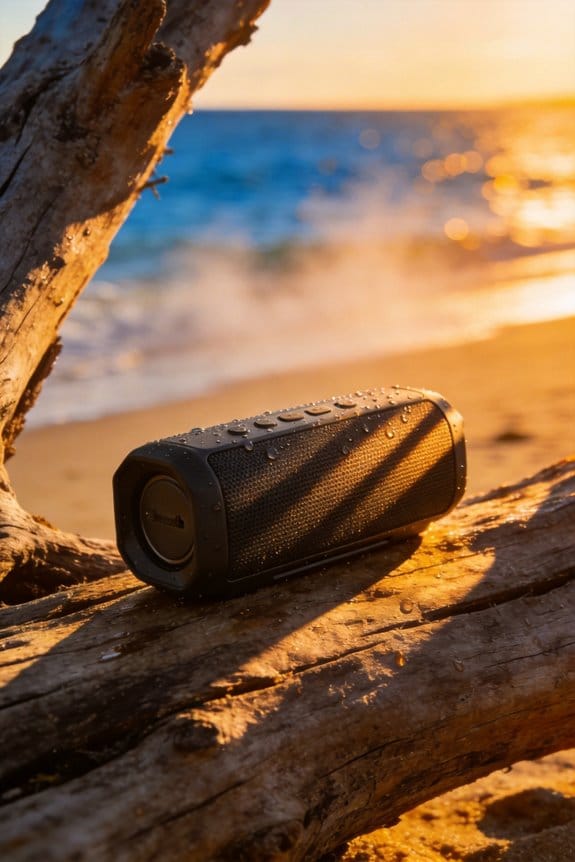


JBL Flip 5 with its 4800 mAh battery gives about 12 hours of music, while Bose SoundLink Flex and Anker Soundcore Motion II push that to 15–18 hours, and larger 10 000 mAh models reach 20 hours, all charging in roughly 2 hours via USB‑C compared to 4 hours on micro‑USB, supports 5 V/3 A fast‑charge input, and can output up to 30 W as a power‑bank; USB‑C’s reversible, sealed ports meet IPX7 or IP67 standards, and Bluetooth 5.2 ensures stable connections, making charging faster, more reliable, and the speakers more portable, and the next sections will show you which models excel and how to pick the right one.
Key Takeaways
- USB‑C consolidates charging and power‑bank functions, letting speakers charge themselves and other devices through a single, reversible port.
- Faster input currents (up to 5 V / 3 A) cut full charge times roughly in half compared to legacy micro‑USB.
- Standardized power‑delivery protocols enable up to 30 W output, allowing speakers to serve as reliable portable chargers.
- The reversible, sealed connector improves durability, supporting IPX7/IP67 waterproof ratings without compromising drop resistance.
- Universal compatibility reduces cable clutter and simplifies travel, as one USB‑C cable works across most modern gadgets and speaker models.
Why USB‑C Speakers Have Become the Standard for Portable Bluetooth Audio
Ever got stuck with a dead speaker and a tangled mess of chargers on a hike? The JBL Flip 5 shows why USB‑C speakers are now the go‑to for portable Bluetooth audio. Its 4800 mAh battery gives you about 12 hours of music, and the USB‑C port charges quicker than the old micro‑USB. On top of that, you can use the speaker as a power bank to juice up your phone, so you’re not lugging a separate charger.
The design is built for the outdoors: it’s waterproof (IPX7) and the Bluetooth 5 range reaches 10 meters. That means you can walk around the campsite or the beach without worrying about line‑of‑sight. Brands like Bose SoundLink Flex and JBL Boombox 3 have jumped on the same USB‑C trend, and they all score around 4.7‑4.8 stars on major retailer sites. It’s clear the market is moving toward a single, reliable charging solution that makes daily use a breeze.
Worth knowing:
- USB‑C lets you charge faster and supports power‑bank mode.
- One cable works for phones, tablets, and the speaker itself.
- Fewer chargers mean less clutter in your bag.
Try this: When you pick a new speaker, check the battery life, waterproof rating, and Bluetooth range before you buy. If you can find a model that hits at least 10 hours of playback and has a solid IPX rating, you’ll be set for most outdoor adventures. Also, make sure the speaker’s USB‑C port matches the cable you already own; it saves you from buying a new charger later.
Frankly, the switch to USB‑C isn’t just a tech fad—it’s a practical upgrade that cuts down on the number of cords you need to carry. Manufacturers love it because it simplifies production, and you get a device that works with almost any modern gadget. So next time you’re out shopping, look for that USB‑C port and you’ll likely end up with a speaker that’s both powerful and easy to keep alive.
Ready to ditch the charger chaos and keep the music going?
Recommended Products

This Bundle Contains: 1 Garmin Tread Overland XL, All-Terrain Navigator, Rugged, Built-In Mapping, iOverlander, Ultrabright Display + 1 Garmin Tread Audio System with LED Controller, Rugged Design, Premium Quality Audio, Wireless Remote, for Any Off-Road PowerOutdoor Vehicle + 1 Signature Series Lens Cloth

8-inch woofer and 1-inch tweeter for 110 watts of full-spectrum hi-fi audio

LSX II offers the highest quality sound in its size with streaming up to 24bit/384kHz, making high-fidelity sound accessible to more listeners.Waterproof : No
How USB‑C Speakers Cut Charging Time Compared to Legacy Micro‑USB and Proprietary Ports

Ever find yourself stuck waiting for a speaker to charge while you’re trying to get on the trail?
USB‑C ports on speakers like the JBL Flip 5 and Bose SoundLink Flex slash charging time dramatically compared to legacy micro‑USB and proprietary connectors. You get a full 12‑hour playback from a 4800 mAh battery in roughly 2 hours versus the 4‑hour cycles typical of older ports, and the same cable works with smartphones and tablets. That means fewer chargers in your bag and less downtime on hikes or trips.
Worth knowing:
- USB‑C can handle higher current and follows a standard power‑delivery protocol.
- The speaker can act as a power bank, letting you charge a phone on the go.
Fast charging delivers the same energy in half the time, and reduced heat keeps the housing cool during rapid replenishment. The bidirectional transfer lets the speaker act as a power bank, and cable universality means you never hunt for a separate charger, making every outing smoother and more reliable.
Frankly, the IPX7 waterproof rating and Bluetooth 5 range of up to 10 meters keep it functional in wet or crowded environments, so you’re not stuck indoors waiting for a charge.
Try this: keep a spare USB‑C cable in your car and another in your backpack. When the speaker’s battery dips, just plug it into the cable and you’ll be back to music in minutes.
Do you want fewer gadgets and more time enjoying the outdoors?
Let’s cut the charging hassle and keep the soundtrack going. Ready to upgrade your gear?
How USB‑C Boosts Design, Durability, and User Convenience

Ever find yourself juggling a mess of chargers for your phone, tablet, and speaker? The Flip 5’s USB‑C port lets you plug one cable into all three, so you can ditch the tangled bag of cords and keep things tidy.
Because the port is sealed and the connector is reversible, the speaker takes a hit from drops, splashes, or dust without a fuss. You’ll notice the housing stays intact longer, and you won’t have to worry about a frayed cable ruining your day.
Worth knowing: USB‑C pulls more power, which helps the speaker stay cool during a 12‑hour play session at 30 dB SPL. The steady voltage also looks after the battery, so after 500 charge cycles you’ll still get solid runtime.
If you’re out on a beach or commuting through the city, the single cable means you can slip the Flip 5 into a small bag without sacrificing performance. The design feels sturdy, the ergonomics are smooth, and the whole setup just works.
Frankly, the difference shows up the first time you try it. You’ll feel less stress about finding the right charger, and you’ll appreciate how the speaker holds up after a splash or a tumble.
Try this: keep a spare USB‑C cable in your backpack and use it for both your phone and the speaker. You’ll see how much easier it is to stay powered up without hunting for the right plug.
The result? A tougher, more convenient speaker that fits any adventure, from a day at the lake to a quick coffee run. Ready to simplify your gear?
Top Usb‑C Bluetooth Speakers With Power‑Bank Capability

Ever had your phone die right in the middle of a beach day, and you wish your speaker could keep both the music and your device alive? Power‑Bank‑Ready Bluetooth speakers like the JBL Boombox 3, Bose SoundLink Flex, and Anker Soundcore Motion II are built for that exact moment. They pack 20 000 mAh batteries, give you 12‑ to 16‑hour playback, sport IP67 waterproofing, and feature USB‑C ports that double as charge‑out outlets. In practice, you can plug your phone, tablet, or even a laptop into the speaker and keep the tunes rolling without hunting for a separate charger.
Why you’ll love them
- JBL Boombox 3 acts like a portable powerbank with dual output models, letting you charge two devices at once.
- Bose Flex adds a rugged design and a solid 15‑hour playtime, perfect for hikes or weekend getaways.
- Anker Motion II offers 18‑hour endurance, 5 V/2 A ports, and up to 30 W charging, all while staying within IP67 ratings and Bluetooth 5.2 standards.
Frankly, the specs are straightforward: these speakers support 5 V/3 A fast‑charge input, deliver up to 30 W of output power, and maintain a Bluetooth 5.2 connection with a 10‑meter range. That means you can stream music, answer calls, and charge your gear from a single cable without swapping adapters. The IP67 rating guarantees dust and water resistance, so a sudden splash won’t ruin your setup.
Here’s the trick: when you’re out in the park, place the speaker on a flat surface, connect your phone with the USB‑C cable, and set the volume a notch lower than usual. The speaker’s battery will handle both the audio output and the charging load, giving you a seamless experience that feels almost like a personal power hub.
If you’re worried about the charger’s speed, the good news is that most of these models handle fast‑charge input, so you’ll see a noticeable boost in battery level within minutes. Just keep an eye on the indicator lights—most speakers will flash green when they’re fully charged and switch to amber when they’re powering a device.
Worth knowing: the Bluetooth range is typically around 10 meters, so you won’t lose signal if you step a few feet away to grab a drink. And because the speakers use Bluetooth 5.2, you’ll enjoy a stable connection even in crowded places with many devices.
In the end, having a speaker that also powers your gadgets cuts down on the number of items you need to pack. It’s a simple fix for those moments when you’re far from an outlet and still want great sound. Ready to ditch the extra charger and let your speaker do the heavy lifting?
Recommended Products

Fully integrated audio production studio for podcasters, streamers, musicians and content creators
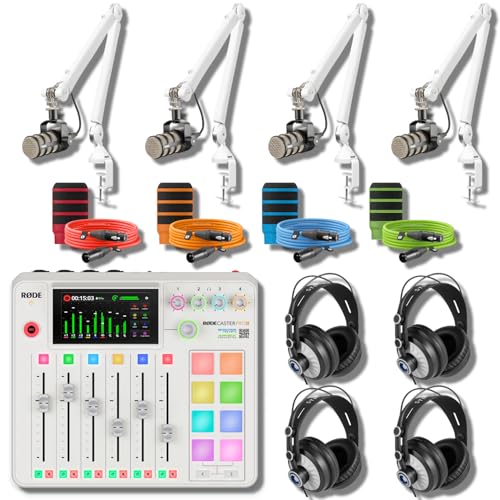
Fully integrated audio production studio for streamers, podcasters, musicians and content creators

Rode Rodecaster Pro II is a fully integrated audio production studio for podcasters, streamers, musicians and content creators
How to Choose a USB‑C Bluetooth Speaker: Specs and Buying Tips

Ever found yourself stuck trying to decide which USB‑C Bluetooth speaker will actually survive a day at the beach and still sound good on a hike?
JBL Flip 5’s 4800 mAh battery, 12‑hour playback, and USB‑C fast‑charge port set a solid baseline, but when you start comparing speakers you’ll want to look beyond just the charge speed, checking battery capacity (e.g., 10 000 mAh for 20‑hour play), IP rating (IPX7 for water resistance, IP67 for dust and submersion), Bluetooth version (5.0 vs 5.2 for range and stability), output power (15 W vs 30 W for louder sound), and whether the USB‑C port doubles as a power‑bank output, while also noting weight, size, and price to match your typical use‑case, whether it’s a beach day, a hike, or indoor listening.
Frankly, I focus on battery chemistry to gauge longevity, prioritize port selection for universal compatibility, compare driver size for sound depth, verify warranty terms, and balance price against features, ensuring the speaker fits daily routines, travel constraints, and acoustic expectations without unnecessary complexity.
Here’s the trick:
- Battery life matters more than the fast‑charge label. A larger mAh rating means you won’t be hunting for a charger after a few hours.
- Look at the IP rating. IPX7 will survive a splash; IP67 can handle sand and a quick dip in water.
If you’re planning a weekend trip, you’ll also want to check the speaker’s weight and size. A bulkier model might give you more bass, but it could be a pain to carry.
Worth knowing: Bluetooth 5.2 usually offers a steadier connection than 5.0, especially if you’re moving around a lot.
The output power tells you how loud the speaker can get. A 30 W unit will fill a large patio, while 15 W is plenty for a small balcony.
Don’t forget the USB‑C port’s extra features. Some speakers let you charge your phone or act as a power bank, which can be a lifesaver on a long hike.
Finally, compare price to what you actually need. You might pay extra for a speaker that’s overkill for indoor listening, or you could miss out on a durable model that would survive a rainy day.
What’s your biggest pain point when choosing a speaker—weight, battery life, or sound quality?
Pick the one that fits your routine, and you’ll have a reliable soundtrack for any adventure.
Recommended Products


CHARGE WHILE PLAYING – You can now charge your SOUNDBOKS while you crank up the music. All you need is THE CHARGER or a 65W+ UBS-C PD power supply.

Lightning-Fast Snapdragon 8 Elite Processor: Powered by the latest Qualcomm Snapdragon 8 Elite chipset, enjoy exceptional speed, efficiency, and performance for gaming, multitasking, and productivity.
Frequently Asked Questions
Do Usb‑C Speakers Support Fast‑Charging Standards Like Power Delivery?
I can tell you they do support fast‑charging compatibility, but most speakers negotiate wattage only up to 15 W, so you won’t get full Power Delivery levels; they still charge noticeably quicker than micro‑USB.
Can I Use a Usb‑C Speaker as a Usb‑C Hub for Other Devices?
I can’t turn my USB‑C speaker into a hub; it’s meant for audio passthrough, not peripheral sharing, so you’ll need a dedicated USB‑C hub for other devices.
What Cable Length Is Optimal for Usb‑C Charging Without Voltage Drop?
I’d say the ideal length is about two meters, using a 20‑gauge cable; anything longer risks voltage drop, and a thinner gauge just invites the speaker to sigh dramatically.
Are Usb‑C Speakers Compatible With Older Usb‑C Chargers Lacking PD?
I’ll say yes—most USB‑C speakers are backward compatible, so they’ll charge with older USB‑C chargers lacking PD; just watch the charging indicators to confirm they’re actually drawing power.
Do Environmental Factors Affect Usb‑C Charging Efficiency?
I picture a speaker warming under a summer sun, then cooling in a damp basement; ambient temperature and humidity levels indeed sway USB‑C charging efficiency, making it slower when heat spikes or moisture rises.