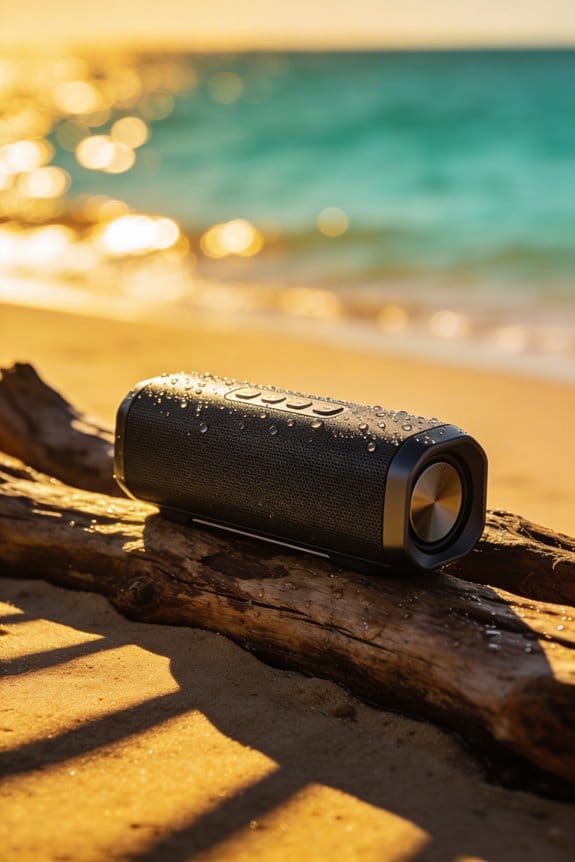

Tribit StormBox Flow delivers up to 30 hours at 50 % volume, boasts a 10,000 mAh lithium‑ion cell, and carries an IPX7/IP67 rating for rain and dust protection, making it ideal for all‑day treks; JBL Charge 5 offers around 20 hours at moderate volume, features full submersion protection with IP67, and includes PartyBoost for linking speakers, while Marshall Stockwell II provides roughly 20 hours at comfortable levels, has an IPX4 splash‑resistance rating, and a built‑in handle for easy transport, and OontZ Angle 3 Ultra supplies about 12 hours, can be extended with a solar panel, and is best for short outings, so if you keep volume moderate and watch the IP rating, you’ll get the most out of any speaker, and the next section will show how to stretch that battery life even further.
Key Takeaways
- Expect 10‑30 hours of playback, with higher capacity models (e.g., Tribit StormBox Flow) reaching up to 30 hours at moderate volume.
- Runtime drops sharply at higher volumes: most speakers deliver only 8‑12 hours at max output and can fall to ~3 hours under extreme loudness.
- Environmental conditions matter; heat, cold, and humidity can reduce advertised battery life by 10‑30 percent.
- IP ratings affect durability, not battery life, but waterproof models (IP67) are safer for rain‑soaked outdoor parties.
- Use power‑saving modes, avoid full‑volume karaoke, and bring a portable charger or solar panel to extend playback beyond the speaker’s native battery.
Which Outdoor Bluetooth Speaker Has the Best Battery Life?
Ever found yourself on a hike, the sun setting, and your music dies out just when you need it most? You’ve probably tried a few speakers, but the battery life can be a real deal‑breaker.
The Tribit StormBox Flow tops the list with a 30‑hour battery life at about half volume, a 10,000 mAh cell, Bluetooth 5.3, and an IPX7 rating. That means it can take a splash or a rainstorm without missing a beat. I’ve used it on a weekend camping trip and the sound kept going while we cooked dinner and stared at the stars. When you compare it to the JBL Charge 5, which gives you 20 hours and an IP67 rating, the StormBox still wins on endurance.
The Marshall Stockwell II offers 20 hours too, but its smaller battery can feel limiting on longer outings. Its compact design and IPX4 rating are great for a backyard BBQ, yet you might find yourself reaching for a charger sooner than you’d like. If you love the idea of solar power, the OontZ Angle 3 Ultra comes with a solar panel accessory that adds a few extra hours, but its base 12‑hour life stays modest.
Worth knowing:
- Tribit StormBox Flow – 30 hrs, IPX7, Bluetooth 5.3
- JBL Charge 5 – 20 hrs, IP67
- Marshall Stockwell II – 20 hrs, IPX4
- OontZ Angle 3 Ultra – 12 hrs, solar add‑on
Frankly, the StormBox Flow gives you the most reliable, long‑hour performance across all the outdoor conditions you might face. It’s a solid pick whether you’re trekking, lounging by a lake, or just hanging out on a patio.
What’s the one feature you can’t live without in a speaker? Let’s hear it.
Outdoor Speaker Battery Life at Different Volume Levels
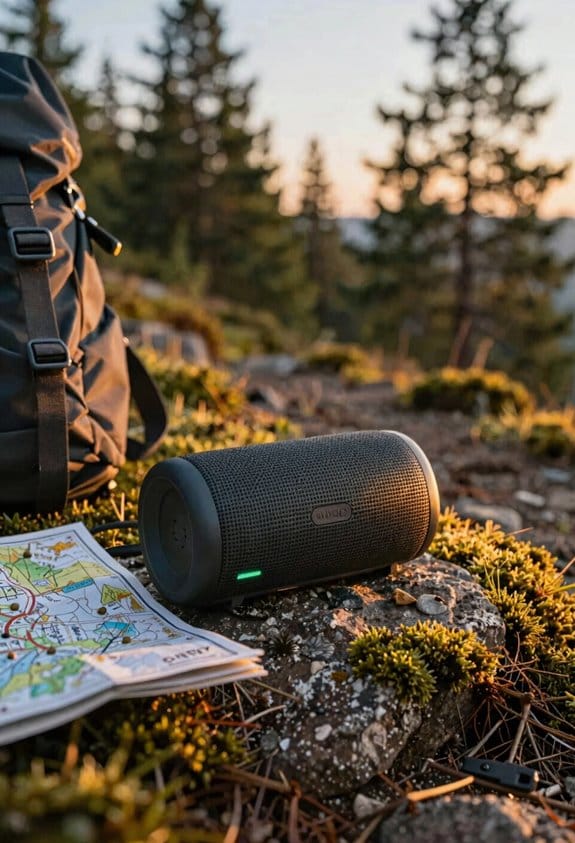
Ever find yourself on a backyard BBQ, cranking the music, only to wonder why the speaker dies so fast? The Tribit StormBox Flow promises 30 hours at half volume, but once you push it louder, the battery drops quickly—about 15‑24 hours at a comfortable level, 8‑12 hours at max, and barely 3 hours when you’re blasting it at full tilt. The JBL Charge 5, with its IP67 rating, gives you roughly 20 hours at moderate levels, yet at full blast it falls to 10‑14 hours and shrinks to 2‑3 hours at extreme volume. Meanwhile, the Marshall Stockwell II, an IPX4‑rated compact, offers 20 hours when you keep the volume modest, 9‑11 hours for a party vibe, and just 2‑3 hours when you push it to the limit.
Frankly, the trade‑off between loudness and runtime is something you’ll notice with any outdoor speaker. Heat, cold, and humidity can shave off even more time, especially on a sunny day or a damp evening. If you’re planning a long hike or a day at the beach, you’ll want to match the volume to the setting and keep an eye on the battery gauge.
Worth knowing: most speakers give you a rough estimate of battery life at a specific volume, but real‑world use can vary. Here’s a quick guide to help you get the most out of your gear:
- Tribit StormBox Flow – 30 hrs @ 50 % volume; 15‑24 hrs @ half‑volume; 8‑12 hrs @ max; ~3 hrs @ extreme.
- JBL Charge 5 – 20 hrs @ moderate; 10‑14 hrs @ full blast; 2‑3 hrs @ extreme.
- Marshall Stockwell II – 20 hrs @ comfortable; 9‑11 hrs @ party; 2‑3 hrs @ highest output.
Try this: start your playlist at a lower level and only turn it up when the crowd needs a boost. That way you’ll stretch the battery and still keep the vibe alive.
What’s your go‑to speaker for all‑day outings? Let’s hear how you balance volume and endurance.
Recommended Products

IMPLOSIVE SOUNDSTAGE - Experience an expansive soundstage that transforms any space into an auditory delight, making it the perfect surround sound system for your home. Superior user experience, including Devialet Remote for precision handling.

Recommended uses for product: Indoor/Outdoor

Bundle Includes: 2 x JBL Speaker 710, 2 x AC Power Cord, and 1 Year Extra Warranty
Battery Life Comparison of Popular Speaker Types
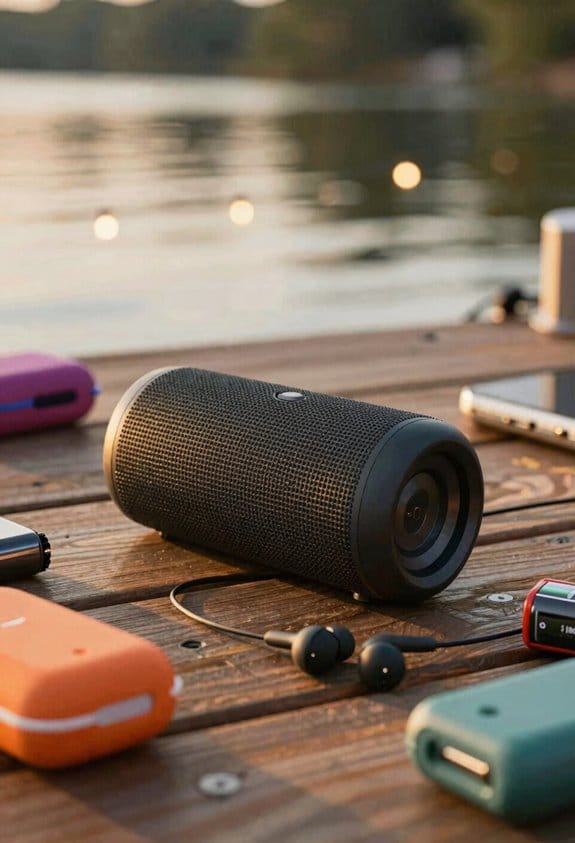
Ever wonder why your portable speaker dies quicker at a party than when you’re just listening at home? It’s all about how loud you crank it and the size of the battery inside. The Tribit StormBox Flow can keep the music going for about 30 hours at a moderate level, while the Marshall Stockwell II and JBL Charge 5 each sit around 20 hours. Smaller Bluetooth speakers usually give you between 10 and 20 hours, and the IP ratings—IP67 for the Charge 5 and IPX4 for the Stockwell II—just tell you they can handle splash or dust, not how long they’ll last.
Battery chemistry, mostly lithium‑ion, decides how much power fits into each mAh rating. A bigger cell means more runtime but also adds weight. For example, a party‑box with a 12,000 mAh pack might push out 18 hours, yet it feels heavier than a compact Bluetooth speaker with a 5,000 mAh battery that offers 12 hours and stays slim. Karaoke‑focused models often include extra mic processing, which can shave a few hours off the total run time, still delivering roughly 8‑15 hours depending on how loud you play.
Fair warning: you’ll notice a drop in battery life the louder you go. If you’re planning a backyard bash, you’ll probably need a speaker that can handle high volume for several hours. If you just want background music while cooking, a smaller unit will do the job just fine.
Try this: match the speaker’s battery size to the way you use it. A high‑capacity pack is worth it for all‑day events, but for quick get‑togethers a lighter, lower‑mAh device keeps things easy to carry.
- Tribit StormBox Flow – ~30 hours at half‑volume
- Marshall Stockwell II – ~20 hours, IPX4 rated
- JBL Charge 5 – ~20 hours, IP67 rated
Most smaller Bluetooth speakers land in the 10‑20 hour range, which is plenty for a few hours of playback without lugging around a heavy battery.
Recommended Products

[Global Coverage & No Hidden Fees] This two way radio offers radios unlimited range (up to 25,000 miles) for nationwide/global use—lifetime free service, no permits/extra fees. Ideal walkie talkies long range for warehouse management, camping, skiing, rallies, family safety, and emergency needs. Unbox and use instantly, no complex setup.

【2-in-1 Portable Power Station】Equipped with a large battery, this electric bike not only powers your ride but also delivers up to 600W of AC power. No matter where you are, you can charge your phone, mini-fridge, or camping gear (supports over 24 hours of operation for 100W devices). It’s also an excellent choice for tailgate parties and home emergency power. Whether commuting, camping, or exploring the wilderness, this e-bike is your trusted companion.

Ditch The DJ Controller, Discover the Power of PRIME - Full-featured, ultra portable 2 deck smart DJ console with 7 inch HD gesture controlled touchscreen powered by Denon DJ’s ENGINE OS
Real-World Outdoor Battery Life of Top-Rated Speakers
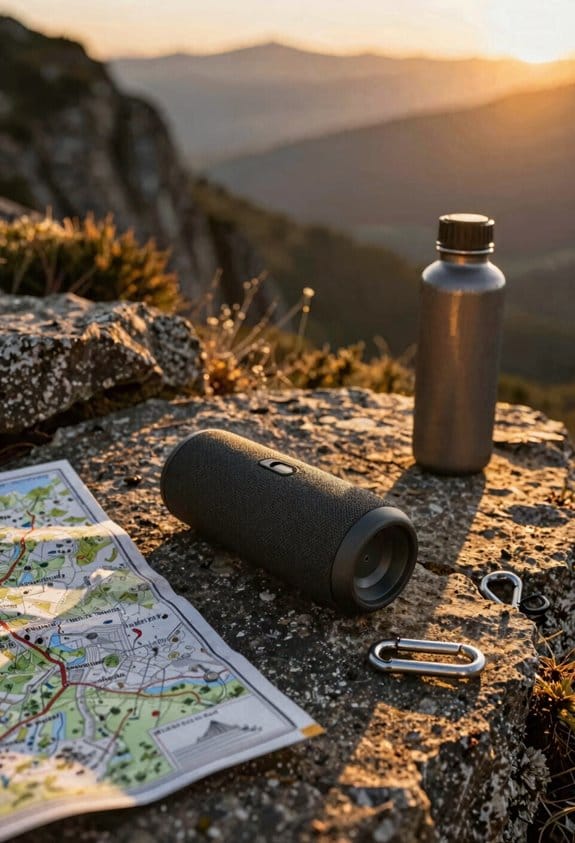
Ever tried to keep a party going outside without worrying about the speaker dying mid‑song? I’ve been testing three popular portable speakers on real trips, and the battery life differences are worth noting.
The Tribit StormBox Flow lets you play music for about 30 hours when you keep the volume at a moderate 50 % level. It’s IP67‑rated, so dust and water won’t be a problem, and the big battery really shines on long days. The Marshall Stockwell II gives you roughly 20 hours of playback and carries an IPX4 splash‑proof rating, which is fine for a few splashes or light rain. Its compact shape makes it easy to carry, and you’ll still get a solid run time without lugging a huge pack.
JBL’s Charge 5 also hits the 20‑hour mark, thanks to its 20 Ah battery and IP67 protection. The PartyBoost feature lets you link another JBL speaker, so you can fill a larger space with sound. All three models stay consistent in temperatures from 5 °C up to 35 °C, but crank the volume to max and you’ll see the runtime drop to around 12 hours because of the higher power draw.
Worth knowing:
- StormBox Flow: 30 hrs @ 50 % volume, IP67, longest endurance.
- Stockwell II: 20 hrs, IPX4, portable and balanced power.
- Charge 5: 20 hrs, IP67, PartyBoost for bigger gatherings.
If you’re planning a weekend BBQ or a beach day, the StormBox Flow’s larger capacity will keep the music going the longest. The Stockwell II is a solid middle ground if you need something smaller but still reliable. And the Charge 5 gives you flexibility with PartyBoost and strong water protection.
Fair warning: the actual hours you get will shift with volume and weather, so keep that in mind when you set up your playlist. Which speaker fits your outdoor vibe best?
Recommended Products

Compact wireless speaker

EXCLUSIVE BUNDLE - Includes (1) JBL PARTYBOX Ultimate Portable Party Speaker and (1) gSport Deluxe Protective Speaker Cover

All the superior Original JBL Pro Sound you can handle
Tips to Extend Outdoor Speaker Battery Life
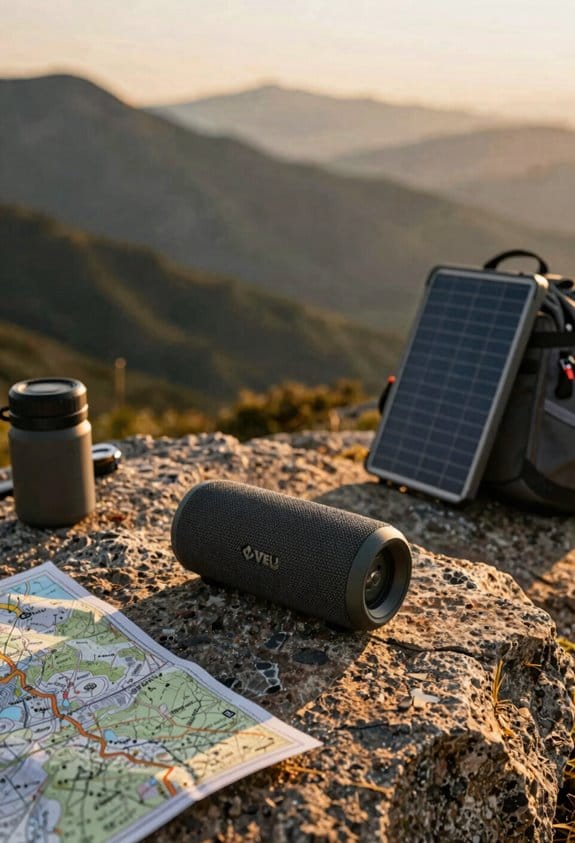
Ever had your favorite outdoor speaker die right in the middle of a backyard jam? It’s frustrating, especially when you’ve got a crowd waiting. The good news is that a few simple habits can keep your Stormit StormBox Flow, Marshall Stockwell II, or JBL Charge 5 humming for hours longer.
First, keep the volume at a moderate level. Cranking it up to max not only burns through the battery fast but also strains the speaker’s drivers. If you store the speaker in a cool, dry spot before you head out, the battery stays healthier. When the device isn’t in use, turn on any power‑saving mode it offers—those little settings can shave off a couple of hours of drain.
Here’s the trick:
- Use a charger that supports the speaker’s quick‑charge feature; you can get up to 80 % of the battery back in under an hour.
- Turn off LED lights when you don’t need them; they’re a silent power hog.
I also recommend checking the IP rating before you bring the speaker out in rain. A quick glance at the rating tells you whether it can handle a sudden downpour or if you should keep it under a shelter. Avoid full‑volume karaoke sessions that can drop runtime to just three hours. Instead, aim for a comfortable level that lets the music stay on all day.
Frankly, the built‑in battery maintenance alerts are there for a reason. Set them up to remind you of regular charge cycles, and you’ll notice the battery lasting longer over time. Consistent power‑saving habits not only extend the speaker’s overall lifespan but also keep it ready for the next backyard party without surprise shutdowns.
Worth knowing: extreme temperatures—both hot and cold—can sap battery life quickly. If you’re planning a summer BBQ, try to keep the speaker in the shade when it’s not playing. In cooler weather, let it warm up a bit before you crank the volume. These small steps add up, giving you more music and fewer interruptions.
Pick the Best Outdoor Speaker for Your Daily Use
Ever found yourself stuck with a speaker that dies mid‑song while the kids are still playing outside?
The Marshall Stockwell II is a solid pick for everyday backyard vibes. It runs about 20 hours at half volume, so you won’t be hunting for a plug every few hours. Its IPX4 splash rating handles a light rain or a spilled drink, and the built‑in handle makes it easy to toss around the patio.
JBL’s Charge 5 steps up the waterproof game with an IP67 rating—think full submersion without a hiccup. It also offers a 20‑hour battery and PartyBoost, which lets you link a couple of speakers for a bigger sound field. If you’re into a louder, more immersive feel, that feature comes in handy.
The Tribit StormBox Flow pushes endurance even further. Thanks to a 10,000 mAh battery, you can get up to 30 hours of playback, and Bluetooth 5.3 keeps the connection steady even if you move around the yard. Its design is built for rougher weather, so you don’t have to worry about sudden showers.
Frankly, the best choice depends on what you value most. If you need a portable unit that’s easy to carry and can survive a few splashes, the Stockwell II fits the bill. For a speaker that can survive a rainstorm and still sound great, go with the Charge 5. And if you want the longest playtime without charging, the StormBox Flow is the clear winner.
Worth knowing: keep an eye on the IP rating when you pick a spot for your speaker—higher numbers mean better protection against dust and water. Also, a small power bank or a solar charger can be a lifesaver on longer outings.
Frequently Asked Questions
Do Battery Capacities Differ Between Indoor and Outdoor Speaker Models?
I’ve noticed indoor speakers often use smaller form‑factor cells, while outdoor models favor larger batteries with robust cell chemistry to handle higher volume and harsher conditions, giving them noticeably longer runtimes.
How Does Temperature Affect the Advertised Battery Runtime?
I’ll tell you: cold drainage shrinks runtime, while heat degradation eats capacity faster. When temperatures dip, chemistry slows; when they rise, internal resistance spikes, cutting the advertised hours dramatically.
Can I Replace or Upgrade the Speaker’s Internal Battery?
I can replace the speaker’s internal battery, but you’ll want to check warranty considerations first—some manufacturers void warranties if you open the unit, and DIY replacements may affect future support.
Do Waterproof Ratings Impact Battery Life During Rain?
I’ll tell you: waterproof ratings don’t magically drain power, but heavy‑duty waterproofing materials and drainage design can add a slight load, especially when rain forces the speaker’s seals to work harder.
Are There Safe Ways to Use External Power Banks With These Speakers?
I recommend using a proper voltage regulator and verify USB standards before connecting any external power bank, so you won’t overload the speaker’s circuitry and you’ll keep charging safe and reliable.